On screen
Juice (1992): Bishop, or Tupac the Actor
By Selim Rochat · 8 July 2026 · 4 min read
I remember the first time I saw Juice with absolute clarity. A rental VHS, in Lausanne, on a rainy Sunday in 1996. I already knew the rapper. I wasn’t prepared for the actor. Twenty minutes in, I’d forgotten I was watching Tupac Shakur. I was watching Bishop, a Harlem kid tipping over the edge, and that slide chilled me to the bone.
Bishop, the role that changed everything
Juice came out in January 1992. It was the first feature by Ernest R. Dickerson, until then Spike Lee’s cinematographer (that’s him behind the camera on Do the Right Thing). The film follows four Harlem teenagers, among them Q, an aspiring DJ played by Omar Epps, and Bishop, played by a twenty-year-old Tupac who at that point had released exactly one album.
Bishop is not a movie villain. He’s a humiliated, fragile boy who discovers in a handgun the only power anyone has ever handed him. What still strikes you today is the precision of the performance. Tupac overplays nothing. He lets the menace build in the eyes, in the silences, in a way of smiling at exactly the wrong moment. American critics praised the performance at the time, and many still count it among the great roles of 90s hip-hop cinema. I’m one of them.
Where that talent came from
People tend to forget this: Tupac was a trained actor before he was a signed rapper. As a teenager he studied at the Baltimore School for the Arts, a public arts school where he took classes in theater, poetry, ballet. He performed the classical repertoire there, Shakespeare included, and for the rest of his life he would describe those years as his happiest. You can hear that training in his music, in his diction, in his feel for character. Above all, you can see it on screen. When he plays Bishop, he isn’t doing Tupac in front of a camera. He’s building a role, with real technique underneath the instinct.
The full picture: five films in five years
The filmography is short. It fits in one hand, and it rewards the trip.
Poetic Justice (1993). John Singleton, fresh off Boyz n the Hood, gave him the part of Lucky, a South Central mailman, opposite Janet Jackson as a grieving poet. A sentimental road movie, flawed but endearing. Tupac shows a softness nobody knew he had, light-years away from Bishop. It may be his most tender role.
Above the Rim (1994). Back to the dark side as Birdie, a dealer and godfather of Harlem streetball. The film is more conventional, but Tupac is magnetic in it, and the soundtrack, carried by the Death Row label, has stayed a classic. To get your bearings on the music of this period, my guide on where to start lays out the landmarks. This film deserves more than a paragraph, and I come back to it in the guide devoted to Above the Rim, with Birdie and the soundtrack.
Gridlock’d (1997). My favorite after Juice. Tupac and Tim Roth play two heroin-addicted musicians who decide to get clean and run headlong into the absurdity of social services. A black comedy, almost Beckettian, written and directed by Vondie Curtis-Hall. The film opened in January 1997, four months after Tupac’s death. Watching it today is a gut punch: he’s funny in it, precise, completely free. You measure what cinema lost.
Gang Related (1997). His final shoot, also released posthumously, in the autumn of 1997. A crime thriller in which he plays, alongside James Belushi, a corrupt cop caught up in a killing gone wrong. It isn’t a great film, but Tupac carries an adult, morally ambiguous lead without breaking a sweat, far from the street characters. The direction his career would have taken, most likely.
What the actor tells us about the artist
These five films tell the same story as the albums, in another key. Tupac was a performer in the strong sense of the word: someone who inhabits characters, including in his music, where the tender and the furious sometimes share the same record. Anyone who reduces the man to a gangsta rap caricature has never really watched Gridlock’d, or listened to Me Against the World. The Baltimore theater school never left the Death Row rapper.
Where to watch these films today
Good news: almost everything is accessible, with a little patience.
Juice has had some well-crafted Blu-ray editions, notably an anniversary release from Paramount, and the film regularly shows up as a digital rental on the usual platforms (Apple TV, Google Play, Amazon Video). Check availability in Switzerland and France, it changes often: https://tv.apple.com and https://www.justwatch.com will help you track the comings and goings.
Poetic Justice and Above the Rim exist on DVD and circulate as digital rentals. Gridlock’d is the hardest to find in a French-language version; the English-language DVD or Blu-ray import remains the safest route, region coding permitting. Gang Related turns up second-hand on DVD without any trouble.
One piece of advice on sequence: watch them in chronological order, from Juice to Gang Related. Over five years, you watch an actor mature at breakneck speed, as if his time were running out. It was.
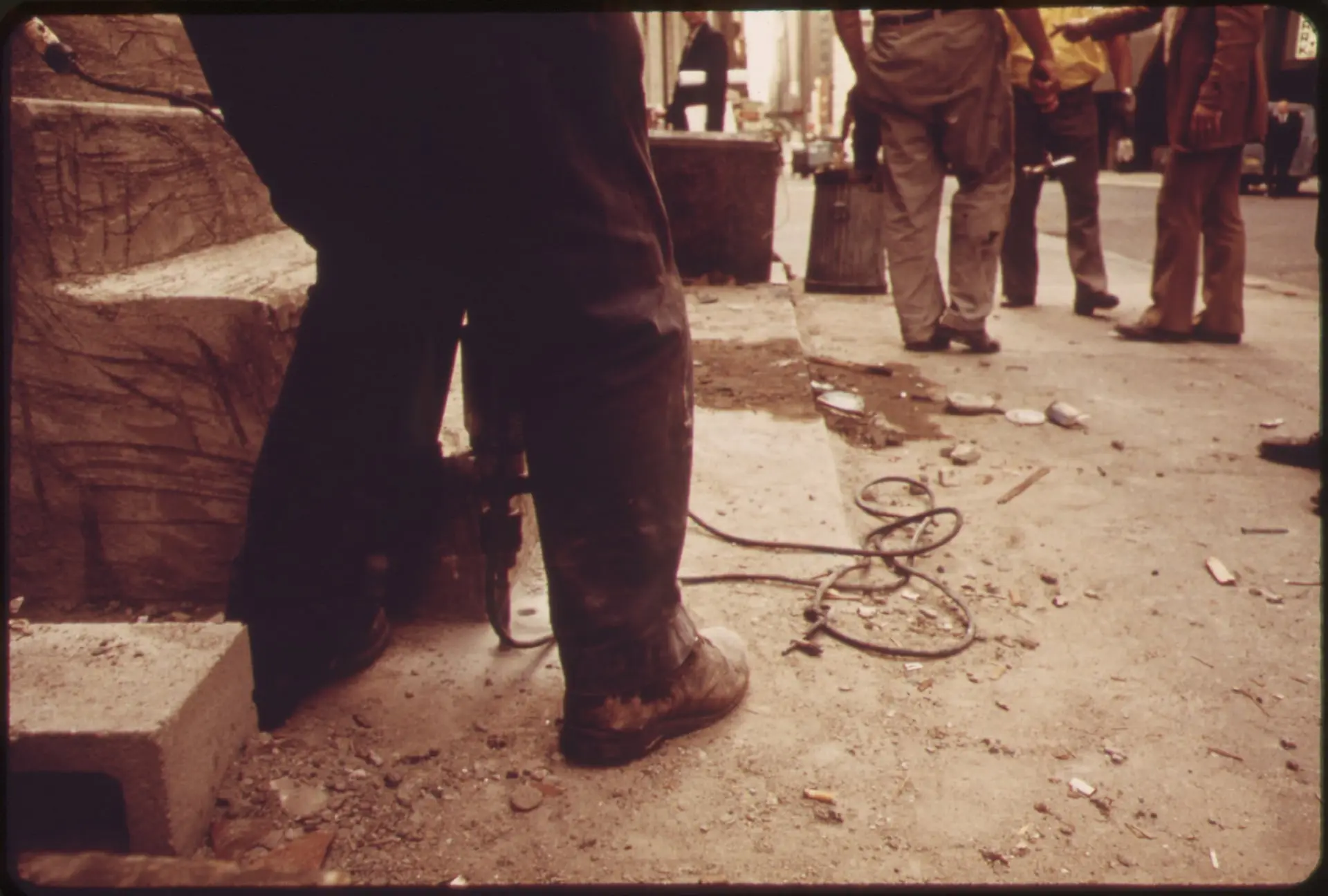
Harlem street in the early 1970s, brick buildings and passersby, photograph from the Documerica programChester Higgins, Jr. (EPA, Documerica) · domaine public
#cinéma#juice#poetic justice#gridlock'd#filmographie