Listening guides
Me Against the World (1995): Tupac's Most Intimate Record
By Selim Rochat · 8 July 2026 · 4 min read
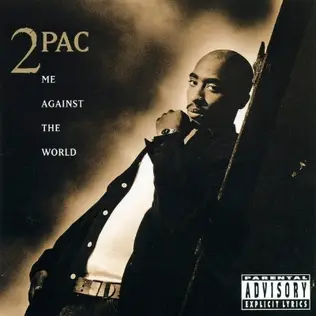
There are records you admire and records you live inside. Me Against the World belongs to the second category. I discovered it late, after All Eyez on Me, and I regretted that order for years. If I had to hand a single Tupac album to someone who has never heard him, it would be this one, without a second’s hesitation. Here’s why, and how to listen to it.
The context: a man at the edge
At the end of 1994, Tupac Shakur is twenty-three and the world is collapsing on him. A criminal trial awaits, one he knows could send him to prison. On November 30, 1994, in the lobby of Quad Recording Studios in New York, he is attacked and shot several times. He survives, shows up to court in a wheelchair, and the verdict comes down. In February 1995 he is incarcerated, ending up at Clinton Correctional Facility in upstate New York.
Me Against the World was written and recorded before all of that, in the months when the trial already weighed on every single day. The album comes out on March 14, 1995, while its author sits in a cell. And something unprecedented happens: the record hits number one on the Billboard 200, making Tupac the first artist to top the American charts while behind bars. That paradox clings to the album forever. It’s the record of a man who senses the fall coming, heard by millions of people while he’s living it.
The sound: soul, jazz, half-light
The first thing that strikes you is the warmth. Where the California rap of the era leans on the shrill synths of G-funk, Me Against the World draws from 70s soul and from textures that verge on jazz. Round basslines, muted keys, well-worn samples. Easy Mo Bee, who was also working with The Notorious B.I.G. around the same time, is behind several of the record’s tensest moments. Around him, a team of lesser-known producers builds a coherent setting, dark without being cold. People often call it a nighttime album. I’d say it’s more of a twilight one: the light is still there, but it’s fading.
That sonic unity explains a lot. Tupac speaks here more than he proclaims. The voice sits close to the mic, the flow breathes, and the whole thing plays like one continuous confession rather than a collection of singles.
The pillar tracks
Here is what’s at stake.
So Many Tears may be the heart of the album. Over a plush production built around a motif borrowed from Stevie Wonder, Tupac takes inventory of his griefs and his failings with a lucidity that chills. You hear a twenty-three-year-old man drawing up the balance sheet of an entire life.
Dear Mama, produced by Tony Pizarro, has become the definitive maternal tribute in the entire history of rap. Nothing saccharine about it, though: Tupac looks straight at the poverty of his childhood and at Afeni Shakur’s failings, then forgives everything. The song was added to the United States Library of Congress, which says plenty about its status.
If I Die 2Nite and Death Around the Corner bracket the album with their paranoia. The first, wound tight by Easy Mo Bee, turns the fear of dying into a race against the clock. The second, later in the record, settles into a siege anxiety, that of a man keeping watch at his window. Heard in 2026, both tracks sound like prophecies, and that’s exactly what makes them hard to replay with a cool head.
Add Temptations, lighter on its feet, and the title track, majestic in its melancholy, and you have the backbone. The rest is far from filler, but those five or six songs are enough to understand why this record stands apart.
Why it’s the way in
Because everything is already here, without the bloat. All Eyez on Me impresses through sheer excess, Makaveli through darkness, but Me Against the World offers the most complete portrait: the son, the militant, the fatalist, the charmer. One hour of music, no double album to digest, no posthumous mythology to untangle. You meet the man before the legend. That’s exactly the order I argue for in my beginner’s guide: this one first, the rest after.
Which edition to choose
On streaming, the album is available everywhere in its original form, fifteen tracks, and that’s exactly as it should be. Beware of playlists that shuffle it in with the posthumous compilations: listen to it in one sitting, in order.
In physical form, the original CD can be found for a few francs and sounds perfectly fine. But vinyl is where this record reaches its full dimension, precisely because of those warm productions. The double LP reissue released for the twenty-fifth anniversary, in 2020, is cleanly pressed and still easy to find at a reasonable price. Original 1995 pressings exist, but they trade at steep prices and add little to the listening itself. My advice fits in one sentence: get the 2020 reissue, a good armchair, and an hour without your phone.
Thirty-one years after its release, Me Against the World has lost nothing. It’s the record where Tupac tells his own story best, and the only one, to my ears, that is entirely sufficient unto itself.
#Me Against the World#1995#guide d'écoute