Close readings
So Many Tears, a Full Reading: The Survivor's Elegy
By Selim Rochat · 9 July 2026 · 13 min read
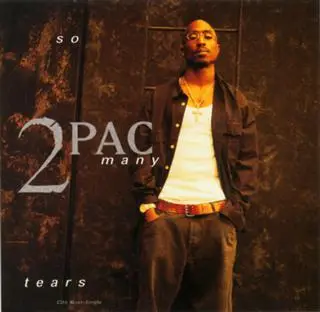
There are more famous tracks in Tupac’s discography than So Many Tears. None, I believe, is more naked. When people ask me where the center of gravity of his work lies, the exact point where the public persona steps aside and leaves a twenty-three-year-old man counting his dead, this is the track I play them. Four verses, a chorus that returns like a held-back sob, a harmonica borrowed from Stevie Wonder, and one of the most honest texts ever recorded about depression, guilt and the fear of dying young. Let’s read it together, first word to last.
The Context: Autumn 1994, Between the Courtroom and the Hospital
So Many Tears appears on Me Against the World, Tupac Shakur’s third album, released on March 14, 1995, and comes out as the second single on June 13 of that year. To grasp what the song is saying, you need to know the state its author was in when he recorded it, in the autumn of 1994, a few months before the record dropped.
A summary, for the reader coming to this fresh. In November 1993, a young woman accuses Tupac of sexual assault in a New York hotel room; the trial opens in late 1994. On November 30, 1994, the night before the verdict, Tupac is attacked in the lobby of Quad Studios in Times Square, where he had come to record a guest verse. Three men rob him and open fire; he is hit five times and survives. The next day he appears in court in a wheelchair to hear the jury find him guilty of sexual abuse. In February 1995 he is sentenced to prison and incarcerated in New York State. When Me Against the World enters the American charts straight in at number one, its author is behind bars. It is the first time an artist has topped the album chart from a prison cell.
But watch the chronology, because it changes everything: So Many Tears is not a song written after the shooting, nor from prison. It was recorded before, during the months when Tupac was living with the trial looming, the growing certainty of confinement, and already the feeling of being a hunted man. The track does not react to the catastrophe. It senses it coming. That is what makes it so unsettling to hear: you think you’re listening to a survivor, and you are actually listening to someone bracing himself.
Add one more layer the song carries beneath its surface: the dead. At twenty-three, Tupac has already lost several people close to him to gunfire, among them Kato, a friend from the Thug Life circle killed in 1994, whom he names in the text. The elegy, that old poetic genre of the funeral song, finds its rap form here: a man mourns his friends, and realizes while mourning them that he is also mourning himself in advance.
The Opening: Psalm 23, Rewritten by a Man Who Never Gets Out
The track opens with a few spoken phrases, almost whispered, before the beat settles in. And any listener raised anywhere near a Bible recognizes them at once: this is Psalm 23, the most famous psalm in the psalter, the one read at American funerals. In the biblical text, the believer passes through the valley of the shadow of death fearing no harm, because God walks with him. The psalm is a text about passage: you enter the valley, you come out the other side, the shepherd keeps watch.
Tupac takes it up and bends it. In his reworked version, he does not pass through the valley: he lives in it. He announces that no human being frightens him, that God alone does, and he observes that wrongdoing has kept him company for as long as he can remember. The shift looks tiny and is in fact enormous. The psalm promised an exit; Tupac describes a residence. The valley of the shadow of death is no longer a passing trial on the believer’s road; it is a neighborhood, an address, a condition you are born into. The whole theology of the track sits inside that rewrite: God exists, Tupac never stops addressing him, but the protection promised to the flock does not seem to extend to the children of America’s ghettos. He is not blaspheming. He is demanding an accounting.
This opening gesture does something else too: it places the track, from the first second, in the funeral register. To begin with the psalm of burials is to announce what’s coming. What follows will be a wake.
First Verse: The Weary Soldier and Kato’s Name
The first verse lays out the tally. Tupac depicts himself at war with his own fate since adolescence, drawn into delinquency around thirteen, hardened too early, and he unspools the paradox that structures the whole text: he has survived everything, and the survival feels nothing like a victory. He evokes the weight of what he has done, a conscience that won’t be quiet, and asks God whether forgiveness is possible for someone like him.
Then comes the most wrenching moment of the verse: he names Kato, the dead friend, wishes him rest, and voices out loud the desire to join him. Let’s pause on what that line does rhetorically. In the classical elegy, the poet weeps for the dead and finds consolation in celebrating them; life goes on, and the song is the proof. Here the consolation is inverted: the dead man is envied. The survivor is not merely saying you are missed; he is saying he would rather be where his friend is. It is the most exact definition of what psychologists call survivor’s guilt, the mechanism documented among those who come back from war and disaster: why him and not me, and by what right am I still breathing. Tupac probably never read the clinical literature. He supplies it with a textbook case.
A word of vocabulary, since this site is also written for newcomers: when Tupac calls himself a thug, a word lazily rendered as hoodlum, you have to hear the meaning he gave it, that of a survivor of abandoned neighborhoods, someone who received nothing and stands upright anyway. He had turned the word into a militant acronym. It runs through the whole track as an identity owned and a circumstance endured, never as a boast.
The Chorus: Counting Tears the Way You Count Years
The chorus is biblically simple, in the literal sense. In it, Tupac takes stock: the weeping has gone past anything he can count, and the hurt has stacked up season after season; and he lays this account before the Lord, as a lamentation. No wordplay, no virtuosity: a complaint, in the precise sense of the psalms of complaint, those texts in which the believer sets his misery before God without ornament.
Musically, this is where the track plays its trump card, and it deserves to be named precisely because it is so often misattributed. So Many Tears is produced by Shock G, the leader of Digital Underground, the funk-driven, prank-loving Oakland group that had given Tupac his first job in music, as a dancer and roadie, before letting him record his first verse. The mentor of the early days thus returns to produce the disciple’s darkest track, and he does it with unexpected material: That Girl, a Stevie Wonder love song from 1981, from which he lifts the harmonica solo and slows it down. That stretched harmonica, hovering over the chorus like a voice that can no longer form words, is the very sound of the song: something gentle made painful by nothing more than deceleration. Shock G said That Girl was among his favorite songs; the loop had not originally been intended for Tupac. It was waiting for him. I’ve told elsewhere how the sound of Tupac was built on this recycled soul; So Many Tears may be its purest example, with its muffled pads, its round bass, its drums striking softly, as if out of respect.
And there is the voice. Tupac never shouts on this track. He raps at the volume of a confidence, with that slightly veiled diction he adopts when he is telling the truth, and at moments you can hear Wonder’s melody bleeding into his phrasing, as if the text were trying to sing and couldn’t quite manage it.
Second Verse: Numbness and Paranoia
The second verse goes down a floor. Tupac describes the mechanisms by which he holds himself together: drink and smoke to dull whatever rises up, the permanent watchfulness of a man who knows he is a target, every movement calculated, every stranger sized up. He paints himself as someone who no longer really sleeps, for whom the whole city has become hostile ground, and he formulates the chilling thought that any step he takes could be the one that brings his early death closer.
What strikes you on the page is the clinical precision. This register is usually filed under paranoia, and the word does appear, spelled out, on other tracks of the album. But what the verse describes resembles less a delusion than post-traumatic stress disorder narrated from the inside: hypervigilance, chemical numbing, constant anticipation of the worst, an inability to inhabit the present. In 1995, nobody was applying that vocabulary to young Black men in poor American neighborhoods. Tupac does it without the vocabulary, with an accuracy that studies of urban trauma would confirm years later.
Let’s be honest, too, about what the verse does not do: it does not apologize. Tupac owns having been an agent of the violence he suffers, having made victims before becoming one. The text holds both positions and lets go of neither, guilty and grieving, sometimes the tormentor and always the prey. It’s uncomfortable, and that is exactly why it’s credible. An elegy that whitewashed its narrator would be an advertisement.
Third Verse: Prison on the Horizon and Mothers in Mourning
The third verse widens the frame. Tupac anticipates the confinement to come, the sentence he knows is likely at the moment of recording, and he inventories the losses: friends fallen one after another, childhood dreams shrunk down, a mind that can no longer find anywhere to rest. There is an image in this verse that has followed me through years of listening: the mothers weeping for their sons, the women the narrator watches carry grief in series, funeral after funeral. For a moment the elegy stops being personal and becomes demographic. These are no longer one man’s tears; they are a generation of mothers’, and the text says so with a sobriety worth any speech: in certain American neighborhoods in the nineties, at the peak of the crack-driven homicide epidemic, burying your sons had become an ordinary experience.
Rhetorically, the verse works by accumulation. The losses pile up without hierarchy, a friend, then another, then freedom, then sleep, and this list without pathos produces exactly the effect a funeral litany produces: through sheer enumeration, the voice wears down, and the wearing down becomes the message.
Fourth Verse: The Sentence Rap Had Never Said That Way
Then comes the last verse, and with it the sentence around which, to my mind, the whole track is built. Tupac declares himself lost, worn out, and he states head-on that he is suicidal, all but warning the listener to keep a safe distance. No metaphor, no detour through a character: the word is spoken, in the first person, on a commercial single in 1995.
We should measure what that represents. Rap had already explored mental anguish, and honesty requires naming the forerunners: Mind Playin’ Tricks on Me by the Geto Boys, in 1991, had set hallucination and dread to music with astonishing courage, and Scarface, within that same group, kept digging the furrow. But the genre was still ruled by armor: invulnerability on display, hardness as a professional code. To say out loud, with no narrative mask, that you want to die, at the top of the charts, was to betray the code. Tupac does it, and he does it at the precise moment when his public legend paints him as the most provocative and self-assured man in American rap. Three decades later, now that mental health has become a central theme of the genre, from Kid Cudi to Kendrick Lamar, this verse stands revealed for what it is: a founding act, cited every time someone traces the history of depression in this music. In 1995, it was simply a private scandal slipped between two choruses.
The verse does not stop at the confession. It swings back toward anger, touches on the betrayals endured and the urge to strike back, that vengeful rumination which, as I’ve shown elsewhere, would become a structuring obsession of the last years of his life (see the betrayals). Then it falls back, exhausted, onto the question that opens and closes everything: how much longer, and what comes after. The track ends in dedication, Tupac reciting the names of his dead the way one lays down flowers, returning the elegy to its first function: that the names should outlive the bodies.
What the Track Foretells: The Road to Makaveli
Heard again today, So Many Tears feels like a seven-minute prophecy compressed into four. Everything Tupac would later unfold is here in seed form: the certainty of dying young, the strained dialogue with God, the question of salvation for the wretched of the earth, the thirst for revenge wrestling with the longing for rest. The Don Killuminati, recorded in the fury of the summer of 1996 and released after his death, would take up these motifs and push them to incandescence: where So Many Tears weeps, Makaveli threatens; where the young man of 1994 asks for forgiveness, the man of 1996 stages himself crucified. But it is the same theology of the valley with no exit, the same countdown heard distinctly. The difference is one of temperature, not of nature. You cannot understand the glacial rage of the final album if you have not first heard the disarmed sadness of this one.
A word on reception, to finish placing the track. The single had a respectable run without being a tidal wave: forty-fourth on the general American chart, top 10 on the rap charts. This is neither Dear Mama nor California Love. But ask listeners who have spent real time with this discography which track they would take with them, and So Many Tears comes back with striking consistency. It is the connoisseurs’ track, the one rappers cite among themselves, the one critics place almost systematically among the peaks of the catalogue. It sits high in my own list of ten tracks to understand him, and if you were to read only one of these full readings, I believe it should be this one.
A Wake for Oneself
So what does So Many Tears really say, once you’ve followed the text from end to end? This, I think: that you can survive everything except your own survival. The track begins with the psalm of burials and ends with a list of the dead, and in between, a twenty-three-year-old discovers that weeping for his friends was also a rehearsal of his own ceremony. Tupac wrote many songs about the deaths of others and many about his own. This is the only one where the two griefs merge completely, over the harmonica of a love song slowed until it becomes a moan. It is an elegy in which the poet stands among the departed he honors: Tupac is not only mourning his dead here; he is attending, lucid and already in tears, his own wake. In the same funereal register, but set amid the party of All Eyez on Me, Life Goes On has a full reading of its own.
#lecture#me against the world#élégie