Listening guides
The Sound of Tupac: Instruments, Producers, Method
By Selim Rochat · 9 July 2026 · 5 min read
People always talk about Tupac’s lyrics and almost never about his sound. That’s an injustice I want to repair here, because his discography is also a story of producers, machines and method. Follow the musical thread and you’ll see the work differently: each period has its own color, and that color is never an accident.
The producers, period by period
It all begins in Oakland, with Digital Underground. Shock G, the collective’s mastermind, schooled the young Tupac in funk: Parliament-Funkadelic samples, festive groove, live-band culture. You can hear that stamp on the early work, and Shock G kept supplying tracks to his former protégé, all the way to Me Against the World, where he still produced one song. That’s the bedrock: before being a West Coast rapper, Tupac was a child of funk.
Me Against the World, in 1995, is in fact his most New York-sounding album. Among its small army of producers (Tony Pizarro, Soulshock and Karlin, Moe Z.M.D., Sam Bostic, and already Johnny J), you find Easy Mo Bee, the man who was shaping Biggie’s first album at that very moment. He produced two tracks on the record, If I Die 2Nite and Temptations, bringing East Coast boom bap with him: dry, dusty drums, chopped samples, a heavy swing. A delicious detail: Easy Mo Bee remains one of the very few to have produced both Tupac and Biggie. On this album, the coastal rivalry did not yet exist in the faders.
Then comes Death Row, and everything changes. On All Eyez on Me in 1996, two men split most of the work. Johnny J first, the house melodist: How Do U Want It is his, and together with Tupac he recorded at a speed studio engineers still talk about. Then Daz Dillinger, Dre’s pupil: Ambitionz Az a Ridah and I Ain’t Mad at Cha carry his signature. Dr. Dre himself only stepped in occasionally, most notably on California Love. The last turn comes with The Don Killuminati, recorded at lightning speed in the summer of 1996: Johnny J is gone, replaced by a tight crew, QD3 (Quincy Jones’s son, the only producer Tupac already knew), Hurt-M-Badd and Darryl Big D Harper, with Tupac co-producing several tracks.
The machines and the textures
The sound of those years rests on a small arsenal that has since become mythical. E-mu’s SP-1200, a sampler with laughably little memory, forced producers to truncate their samples and gave early-nineties rap that characteristic grainy crunch. Akai’s MPC brought the swing: its pads and forgiving quantization give the drums that slightly human lag no rigid drum machine can produce. Easy Mo Bee’s boom bap lives inside these machines.
The Californian side adds its signature instruments. First the talkbox, that tube a musician holds in his mouth to shape the sound of a synthesizer: Roger Troutman of the group Zapp had made it his trademark back in the eighties, and it is Troutman himself, not an imitation, who plays and sings it on California Love. The most famous robotic hook in rap is a direct bridge between the funk of 1980 and the g-funk of 1996. Around it, the g-funk recipe: round, sliding basslines played or replayed rather than sampled, high synthesizer whines inherited from Funkadelic, rolling tempos made for open-top cars. The track that embodies this recipe best, California Love, also has its full reading.
The Makaveli period, finally, invents a third color: dark pianos. Hurt-M-Badd and QD3 built songs on minor chords, funereal pads, near-liturgical choirs. Gone is the California sunshine: The Don Killuminati sounds like a storm, and that musical darkness fits the paranoia of the lyrics exactly.
The method: fast, loud, in bulk
Which leaves the most singular element: the working method. Every account agrees, from the Death Row engineers to the producers passing through. Tupac wrote fast, often on the spot, walked into the booth and laid down his verse in one or two takes. One song per session was his baseline; several songs in an evening was his version of a good night. Where other rappers spent a week on a track, he treated the first take as the keeper, because it carried the urgency of writing that was still warm.
That pace explains two things. First the volume: in five years of solo career he recorded hundreds of songs, a large share of them unreleased at his death. That is where the posthumous vaults come from, the uneven archive catalogue I sort through in the guide to the posthumous albums. Second, the grain: this method favors energy over polish. You sometimes hear breaths, swallowed line endings, doubles slightly out of alignment. That was a choice. Tupac preferred life to cleanliness.
The voice as an instrument
Let’s finish with the main instrument, the only one present on every track: the voice. Technically, Tupac works a mid-range placement, projected from the chest, with a hammered diction that detaches almost every syllable. He systematically doubles his lead vocals, sometimes in three or four layers, which produces that thickness you’d recognize among a thousand, and he uses ad-libs as a second narration commenting on the first.
And then there is the evolution of the timbre. Listen to a verse from 1991, then a verse from 1996: it’s barely the same man. The young Tupac has a clear, high, almost boyish voice. The post-prison Tupac, the one on All Eyez on Me and above all on Makaveli, has acquired gravel, a rasping undertow, a new gravity. Eleven months of incarceration, the cigarettes, the fatigue and the rage all surely played their part. The result is striking: the voice of 1996 sounds like that of a man who has lived two lives. It fits the testamentary lyrics of the final period so well you’d swear he built it on purpose.
If this musical reading speaks to you, carry on with ten tracks to understand him, this time with your ear turned to the drums, the basslines and the pianos. Tupac’s words made his legend. His sound is what made the music last.
The machines
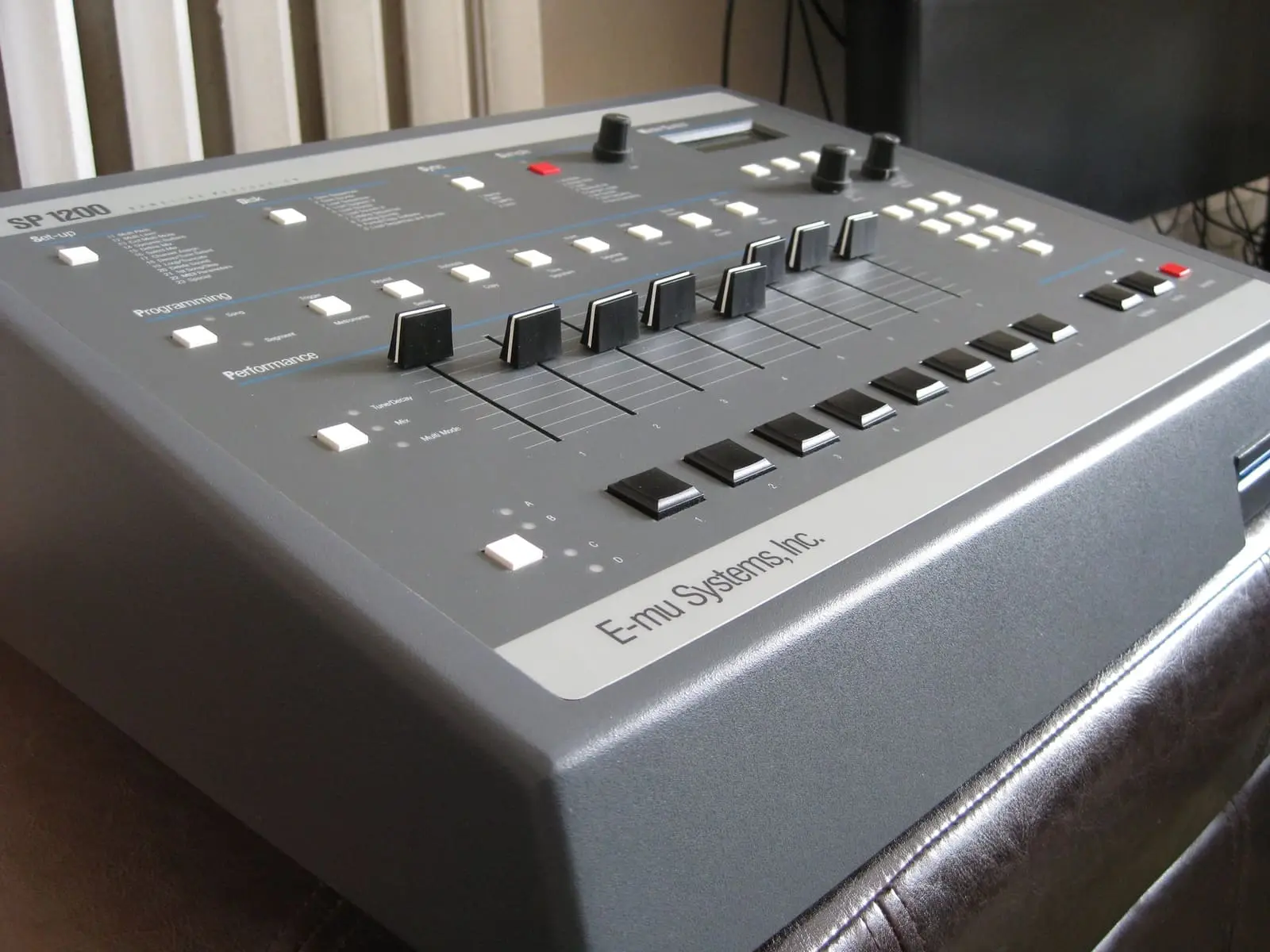
E-mu SP-1200 sampler, cult machine of 1980s-1990s hip-hop production, front panel with pads and faders2xUeL (Wikimedia Commons) · domaine public 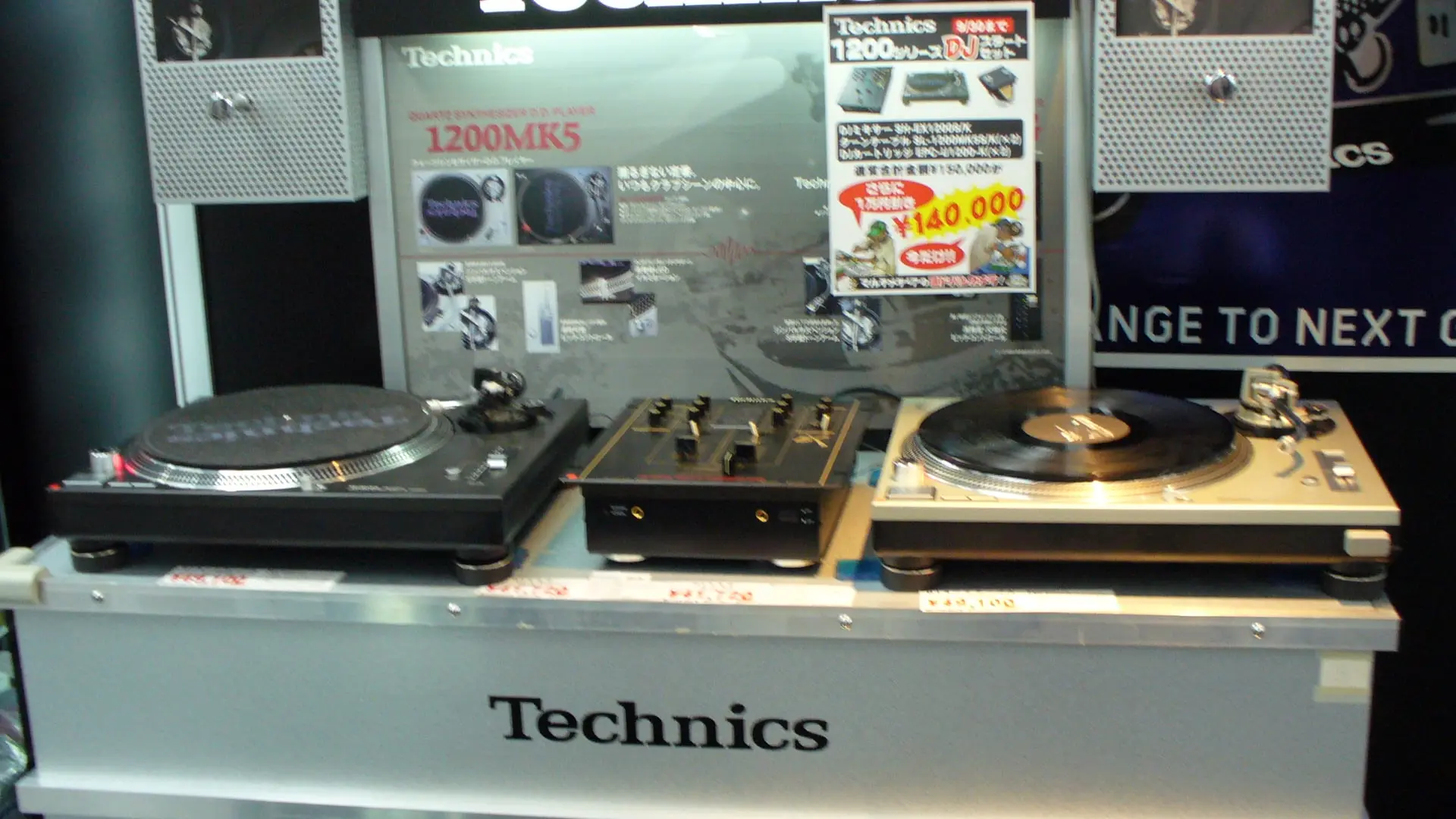
Technics SL-1200 turntable, tonearm resting on a record, the absolute standard of hip-hop DJingDave Walker · CC BY 2.0
#décorticage#production#g-funk#johnny j