Listening guides
Thug Life: Volume 1 (1994), the Forgotten Group Record
By Selim Rochat · 9 July 2026 · 5 min read
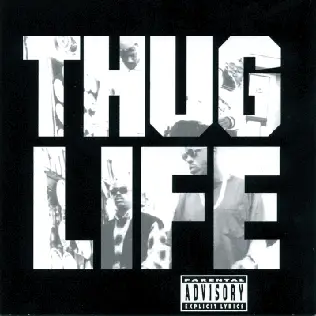
Every discography has one record that even serious fans forget to mention. With Tupac, this is the one. Thug Life: Volume 1, released on September 26, 1994, is not a solo album but a group project, and it arrived at the worst possible moment: two months before the Quad Studios shooting and the trial that would turn everything upside down. As a result, it got stuck between Strictly 4 My… and Me Against the World, crushed by its two neighbors. A shame, because few records shed as much light on what Tupac had in mind at that point in his life.
A group built on family and neighborhood
Thug Life, the group, is first of all a crew. Around Tupac you find Big Syke, a South Central rapper who would become one of his most loyal companions, Macadoshis, The Rated R, and Mopreme Shakur, his brother. An earlier member, Stretch, had left before the album. This is not a lineup of stars, and that’s the point: Tupac, at the height of his fame, chooses to share the mic with people close to him rather than stack up prestigious guests.
Musically, the record fits the West Coast sound of 1994: round basslines, heavy tempos, the mood of a late-night cruise. The producers come from the usual circle, including Johnny J, who would later become one of the chief architects of Tupac’s sound. The album is short, around ten tracks, partly because Interscope shelved several songs it considered too harsh in the climate of moral panic then surrounding gangsta rap. It would go gold, which, for a group project without a real flagship single, is no small feat.
The Thug Life code, the idea behind the brand
This is why the record matters beyond its music. Thug Life was never just a group name: it was a social project. In the early 90s, Tupac was working with older figures from the activist world, including his stepfather Mutulu Shakur, a former militant then behind bars, on drafting an actual code of conduct for gangs. The text, a list of some twenty rules, aimed to limit the damage of street warfare: don’t target innocents, keep children out of it, don’t turn neighborhoods into lawless zones for the very people who live there. The code is said to have been presented and debated at meetings between Los Angeles gangs.
You can call the project naive. It probably was, in part. But it says something essential about Tupac: behind the outlaw posture, there was an attempt to organize, to channel, almost to legislate the street from within. The son of a Black Panther had not renounced his mother’s activist inheritance, a story I tell in my portrait of Afeni Shakur; he was trying to translate it into the language of his generation.
The acronym, the key to it all
Tupac claimed a hidden meaning for Thug Life, an acronym he was happy to explain in interviews: The Hate U Give Little Infants F***s Everybody. In other words, the hate you pour on children eventually comes back down on everyone. Ghetto violence is not spontaneous generation: it’s the product of the contempt, the poverty and the abandonment these kids grow up in, and society as a whole pays the price sooner or later.
Once you have that key, the word “thug” in Tupac’s mouth changes nature. It’s no longer a glorification of the hoodlum; it’s a social diagnosis worn as a banner. You can find the reasoning fragile, and Tupac himself didn’t always live up to his own theory. But the idea traveled far beyond rap: Angie Thomas’s novel The Hate U Give, and its 2018 film adaptation, descend from it directly. The meaning of the phrase, its origin and its distortions now have an article of their own, Thug Life: What the Phrase Meant to Tupac.
Pour Out a Little Liquor and the tracks that endure
On the record itself, the song that survived is Pour Out a Little Liquor, performed by Tupac alone and also featured on the soundtrack of Above the Rim the same year. It’s an elegy: you symbolically spill a few drops of drink on the ground in memory of friends who are gone, a street ritual of urban America that the track helped engrave into popular culture. The whole melancholy side of Me Against the World announces itself here.
The rest of the album is worth hearing mostly for its workshop atmosphere: Tupac as team captain, handing out verses, letting Big Syke or Mopreme hold the floor. It’s not the best music of his career. It may be the most brotherly.
Why this minor record illuminates the man
Because it shows the in-between Tupac, the one the grand narratives leave out. Not the young militant of 2Pacalypse Now, not the introspective convict of 1995, not the superstar of All Eyez on Me: a twenty-three-year-old trying to build something collective, a code, a group, an extended family, at the exact moment his personal life is falling apart. After the shooting of November 1994 and the incarceration, Thug Life the group would never recover.
So listen to it for what it is: a piece of context, indispensable to anyone who wants to understand the man beyond the canonical albums. If you’re new to the discography, start instead with my entry guide. But if you already know the peaks, this single volume, with no sequel and no equivalent, deserves better than the polite oblivion it has slept in for thirty years.
#albums#thug-life#projets-de-groupe