Listening guides
2Pacalypse Now (1991): The Incendiary Debut
By Selim Rochat · 9 July 2026 · 4 min read
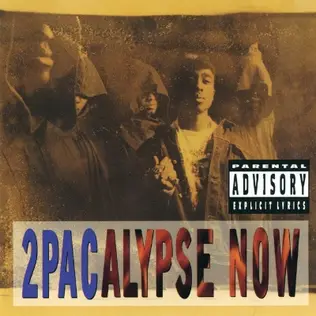
I remember my first listen to 2Pacalypse Now vividly. It was years after its release, on a cassette dubbed by a friend who told me, more or less, that I’d never understand Tupac until I’d heard this. He was right. This debut solo album, released on November 12, 1991 on Interscope, is not Tupac’s most beautiful record. Nor is it his most accomplished. But it is the most important one for understanding where everything else came from.
A young man in a hurry to say serious things
In 1991, Tupac is twenty years old. He’s barely out of the shadow of Digital Underground, the Oakland collective that took him in as a dancer, a roadie, then a backup rapper. Earlier that year, he’d dropped a verse on Same Song. And suddenly here he is with a full album, with hardly a single party track on it, entirely focused on what he sees around him: police brutality, ghetto poverty, teenage pregnancy, young Black men crushed by a system that offers them no way out.
What still strikes you today is how head-on it all is. No detours, no protective irony. On Trapped, he describes the vise of police harassment with a rage that doesn’t bother with nuance. On Soulja’s Story and Violent, he slips into the skin of cornered characters. You can hear the son of a Black Panther activist, raised on political speech since childhood, who has decided that rap will be his pamphlet, his newspaper and his pulpit all at once.
Brenda’s Got a Baby, the narrative manifesto
If you could keep only one track from this record, it would be this one. Brenda’s Got a Baby tells, in a little under four minutes, the story of a twelve-year-old girl who gets pregnant, gives birth alone and goes under. What matters here is the method. Tupac doesn’t comment, he narrates. He picks a first name, a situation, a timeline, and lets the story do its work.
This narrative, almost journalistic approach would become one of his great signatures. You’ll find it again later in the portraits of women on Strictly 4 My…, then in the confessions of Me Against the World. On Brenda’s Got a Baby it’s already there, fully formed, with that particular empathy for the women around him that sets Tupac apart from so many of his contemporaries. The track is said to have been inspired by a news item he read in the press. True or embellished, it hardly matters: it rings true, and that makes all the difference.
The production is still rough. So what?
Let’s be honest here: musically, 2Pacalypse Now shows its age. The production, handled largely by the Digital Underground circle, with people like Shock G, Big D the Impossible and the Underground Railroad, sticks to the conventions of very early 90s West Coast rap. Funk loops that sometimes run dry, drums that hit hard, little of the sophistication that would come later. Some tracks have aged badly. It has to be said.
But that roughness serves the message. A record this urgent, this angry, would not have survived a polished setting. And in the middle of all that raw material, Tupac’s voice already cuts through. That timbre, that percussive diction, that way of loading every syllable with an almost theatrical intensity: it’s all here from the first album. The technique would sharpen. The grain would remain.
The Quayle affair, or when an album becomes an affair of state
In 1992, 2Pacalypse Now abruptly leaves the musical sphere. In Texas, a young man who shot a police officer during a traffic stop claims he was listening to the album at the time. The controversy swells all the way to the White House. Dan Quayle, then Vice President of the United States in the middle of a re-election campaign, publicly declares that this record has no place in American society and asks Interscope to pull it from sale.
The label doesn’t back down. And history will mostly remember this: an American vice president went after the debut album of a twenty-year-old rapper, by name. Hard to imagine better confirmation, for Tupac, that his words carried weight. This collision between his work and political power foreshadows all the ones to come, and it directly feeds the public persona he would build afterwards, all the way to the excesses of All Eyez on Me.
Why listen to it today
Because it’s the blueprint. Everything Tupac would develop later exists here in embryo: the social storyteller of Brenda’s Got a Baby, the rebel of Trapped, the mouthpiece of a generation that knows it’s been written off in advance. Even the character’s fundamental paradox, that tension between tenderness and fury, is already visible.
I’d advise against starting here if you’re new to Tupac; my beginner’s guide suggests a gentler path in. But once you know the peaks, come back to 2Pacalypse Now. Listen to it the way you read a great writer’s early work: to watch a voice being born. You’ll hear a young man who has nothing to lose yet and who sincerely believes rap can change things. He would never again find that faith so intact. That’s what makes this imperfect record absolutely precious.
#albums#annees-interscope#rap-conscient