Listening guides
Ten Tracks to Understand Tupac
By Selim Rochat · 9 July 2026 · 5 min read
People often ask me how to get into Tupac when there’s no time to work through seven albums. Here’s my answer: ten tracks, in chronological order, that tell the whole trajectory on their own. This isn’t a ranking of his best songs, it’s an itinerary. Each stop sheds light on the next. Grab a good pair of headphones, close your tabs, and follow the thread. For the full context on each record, the links point to my album reviews.
Brenda’s Got a Baby (1991)
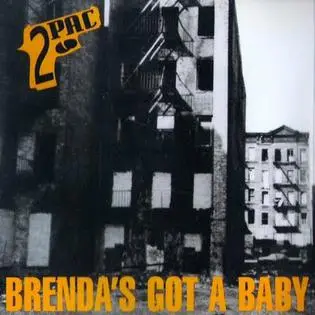
On 2Pacalypse Now, this first great narrative establishes the method straight away: tell an entire life in a few minutes. Tupac follows a pregnant twelve-year-old girl, abandoned by everyone, and traces the downward spiral to its end without ever looking away. At twenty, he chose to carry the voices of the women that the rap of his era ignored or despised. Listen to the restraint: no screamed pathos, a narration that’s almost journalistic, and that’s exactly what chills you.
Keep Ya Head Up (1993)
Two years later, on Strictly 4 My…, he turns diagnosis into encouragement. The song speaks to Black women, to single mothers, with a gentleness few rappers dared to show at the time. The contrast with the rest of the record, which often seethes, already reveals the artist’s double nature. This is the sunlit Tupac, the one who consoles.
I Get Around (1993)
Same album, different face. With Digital Underground, his original crew, Tupac delivers a carefree summer hit, funny, a touch provocative. You need to hear it to grasp that the man wasn’t only a tragedian: he could be light, he could flirt, he could have fun. That coexistence of the grave and the frivolous, sometimes two tracks apart, is his signature.
Dear Mama (1995)
The summit of Me Against the World, written as his legal troubles piled up. A letter to his mother, Afeni Shakur, a former Black Panther who fought her way out of addiction, in which gratitude erases none of the wounds. The Library of Congress added it to the National Recording Registry, and for once the institution got it right: it’s one of the truest texts ever written about complicated filial love. Notice how the soul sample wraps around the voice, almost like an embrace.
So Many Tears (1995)
Still on Me Against the World, the nocturnal side. Here Tupac settles accounts with death, guilt, the fear of never growing old. He’s twenty-three and writes like a man who knows he’s living on borrowed time. This is the track I play for anyone who believes nineties rap didn’t know how to talk about mental health.
California Love (1995)
The first single of the Death Row era, prelude to All Eyez on Me, with Dr. Dre at the controls. Barely hours out of prison, Tupac races into the studio and records an anthem. The track flattened everything in its path back then, and it remains the most immediate way in: West Coast funk at its peak, the euphoria of a man set free. The party, before the storm.
Ambitionz Az a Ridah (1996)
The opener of All Eyez on Me, and maybe the most intimidating opening minute in nineties rap. It’s all there: the voice hardened by prison, the defiance, Daz Dillinger’s menacing production. This is the Death Row-era Tupac, armored, out for payback. Listen to the diction, that way of biting into every syllable as if he had to convince the entire world in a single verse.
I Ain’t Mad at Cha (1996)
On the same double album, the perfect counterpoint. A letter to a childhood friend whose path diverged from his, without bitterness, carried by a melancholy piano. The video, in which Tupac dies in a hail of bullets, came out days after his real death, which fed no end of legends. Stay with the music: it’s one of the most moving pieces in the catalogue, precisely because it forgives.
Hail Mary (1996)
The shadowed heart of The Don Killuminati, recorded in a rush under the Makaveli alias and released after his death. The atmosphere of a wake, religious imagery turned inside out, a voice that seems to come from beyond. This is the record of paranoia and the East-West feud, and this track concentrates all its darkness. Listen to it late, alone, to measure where the story had taken this man in barely five years.
Changes (1998)
Released on the Greatest Hits two years after his death, built on a Bruce Hornsby sample, recorded in 1992. The political reckoning: poverty, the police, America’s dead ends, and despite everything an outstretched hand. That a song written under the elder Bush still sounds current says everything about the text, and everything about the country. If you could keep only one track to understand why we’re still talking about him, this would be it. For the rest of the posthumous catalogue, my guide to the posthumous albums sorts the wheat from the chaff.
After these ten tracks
You’ll have crossed the essential terrain: the social chronicler of 1991, the son, the party animal, the wounded soul, the Death Row soldier, the ghost of Makaveli. Ten songs, five years of recordings, an entire body of work in embryo. The logical next step is to take each album in order, and for that my guide on where to start is there to take your hand. Happy listening, and take your time: these records have to be earned. To move from tracks to whole records, the reasoned ranking of Tupac’s albums helps you choose which album to continue with.
#écoute guidée#playlist#discographie