The legacy
The Posthumous Albums: A Sorting Guide
By Selim Rochat · 8 July 2026 · 4 min read
Tupac died in September 1996 leaving hundreds of recorded songs behind him. He worked at a pace nobody has matched since, several tracks per session, sometimes in a single take. The result: for thirty years the posthumous catalogue has kept piling up, and newcomers get lost in it. I’ll be blunt, the way I would have been with a friend in the record aisle: it is not all worth your time. Here is my sorting, album by album.
The foundation: what genuinely deserves a listen
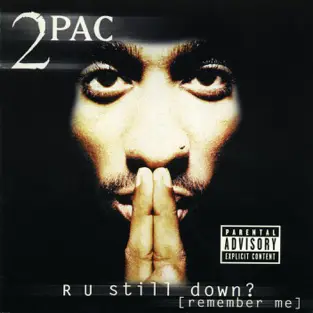
R U Still Down? (Remember Me) (1997). The first posthumous album, and one of the most honest. It gathers recordings from 1992-1994, so from before Death Row, with limited production touch-ups. You hear the Tupac of the Me Against the World period: introspective, melodic, often heartbreaking. If you buy only one posthumous studio record, it’s this one.
Greatest Hits (1998). Yes, a compilation. But not just any compilation: this is where Changes appeared, a song recorded in 1992 that stayed unreleased in his lifetime and has since become his best-known track among the general public. A double disc with an intelligent selection covering every period, from the first album to Makaveli. As a gift, as an introduction, for the car: hard to do better. The vinyl, reissued several times, is gorgeous.
Until the End of Time (2001). The first posthumous release overseen by Afeni Shakur after she recovered the masters. A double album, so uneven by construction, but the title track and a handful of songs justify the purchase. It is also the first record where the question of retouching becomes serious: instrumentals rebuilt, guests added. More on that below.
Better Dayz (2002). Same formula, a double album drawn from the 1996 Death Row archives, the All Eyez on Me period. Uneven as well, but the best of it is very good, and the whole gives a faithful sense of the staggering productivity of his final months. For the already converted rather than the beginner.
Tupac: Resurrection, the soundtrack (2003). Lauren Lazin’s documentary, built entirely on Tupac’s own voice narrating his life, was nominated for the Academy Award for best documentary. Its soundtrack, overseen by Eminem, mixes classics with reworked unreleased material. The film matters more than the record, and I recommend it without reservation. The soundtrack itself is worth two or three tracks.
The grey zone: catalogue products
Loyal to the Game (2004). The textbook case. Produced almost entirely by Eminem, from nineties a cappellas laid over 2004 instrumentals. Among purists, and I’m half of one, the record grates: Eminem’s syncopated productions pull Tupac’s voice toward an aesthetic that was never his, and some of the added features feel frankly anachronistic. Still, the album sold very well and a few tracks work. A curiosity, not a necessity.
Pac’s Life (2006). Released for the tenth anniversary of his death. Bottom of the vault, and it barely pretends otherwise: the strongest archives were already out, and contemporary guests crowd onto verses that were never meant for them. This is the record I never reach for. The proceeds funded the foundation Afeni created, which is entirely to her credit, but artistically this is the seam running dry.
The overdub question
It runs through the entire posthumous catalogue, so let’s state it plainly. Tupac left tapes, not finished albums. Every posthumous record is therefore the product of choices made by others: keep the original instrumental or remake it, leave the song bare or invite an artist of the moment. The further forward in time you go, the more the second option dominates, and the further the result drifts from anything Tupac would have signed off on. My personal criterion: the closer the production is to the era of the recording, the more trustworthy the record. R U Still Down? passes the test. Pac’s Life does not.
The legacy, consecrated
Two recent milestones frame all of this. In 2017, Tupac entered the Rock and Roll Hall of Fame in his very first year of eligibility, inducted by Snoop Dogg. For a rapper who died at twenty-five, the honour states the obvious: he belongs to the history of American music, not just to the history of rap.
And in 2023, FX aired Dear Mama, Allen Hughes’s five-part documentary series, which tells in parallel the life of Afeni Shakur, Black Panther activist, and that of her son. It is, by a wide margin, the best document ever devoted to Tupac: unseen archives, first-hand testimony, and a perspective that puts the music back inside the political history it came from. If the posthumous maze discourages you, start there, then come back to the records with my guide on where to start.
My buying order, to finish
Greatest Hits first, for the overview and for Changes. R U Still Down? next, for the most sincere posthumous studio work. Until the End of Time and Better Dayz to go deeper. The rest only if the passion takes hold, and it takes hold fast. For those who want the object rather than the file, I gathered the useful landmarks in a guide to collecting Tupac on vinyl, from original pressings to reissues to avoid.
#albums posthumes#greatest hits#until the end of time#loyal to the game#dear mama