The legacy
Until the End of Time (2001): The Overdub Turning Point
By Selim Rochat · 9 July 2026 · 4 min read
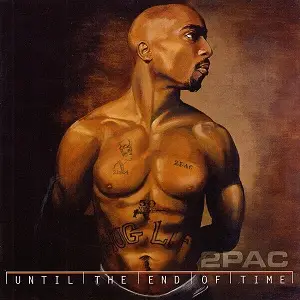
March 2001. Tupac has been dead for four and a half years, and a twenty-nine-track double album lands straight at number 1 on the Billboard 200, with first-week sales that crush the living competition. On paper, Until the End of Time is a triumph. On the ears, it’s something else: the precise moment when the exploitation of the catalogue changes in kind. I remember my first listen, that mix of genuine emotion and creeping unease, like recognizing the voice of someone you love coming out of an impersonator’s mouth.
What changed since 1997
To measure the shift, remember where we started. R U Still Down?, in 1997, released tapes from 1992-1994 almost as they were: a document. Until the End of Time draws instead on the recordings of the Death Row period, that year of 1996 when Tupac committed a frankly insane quantity of music to tape, between All Eyez on Me and The Don Killuminati. The raw material, then, comes from his full maturity. The problem isn’t the source. It’s the treatment.
Because this time the tapes aren’t published, they’re remade. Original productions, often by Johnny “J” or the Death Row regulars, are replaced or heavily reworked by after-the-fact producers, including QD3 and the Trackmasters. Hooks are re-recorded. Guest verses are added by artists from the Outlawz stable or by singers Tupac never directed in a studio. The word for all this is overdubs, and among fans it has become the name of a disease. The voice is authentic; nearly everything dressed around it dates from after the death.
The title track, a perfect symbol
The single Until the End of Time sums up the whole affair. The song rests on a sample of Broken Wings by Mr. Mister, a synthetic hit from 1985, with a hook handed to R.L. of the group Next. It works. It’s even beautiful in places, that FM melancholy laid under a voice speaking of exhaustion and fatality. The track did very well, especially in Europe, riding directly in the wake of the Changes formula I analyze in my article on Greatest Hits: an instantly recognizable eighties pop sample, a sung hook, Tupac’s voice at the center.
But that is exactly where the unease lives. Changes was a finished song, recorded that way while he was alive. Until the End of Time is an editorial construction: someone decided, in 2000, that this 1996 voice would sell better over Mr. Mister. Maybe Tupac would have approved; he had a taste for melodies like that. Maybe not. We’ll never know, and that uncertainty is precisely what the honest posthumous records don’t manufacture.
What still holds up, what has aged
I’m not going to throw the whole record out; that would be as dishonest as praising it wholesale. There are moments in here that still get to me: Letter 2 My Unborn, a devastating address to a hypothetical child, carried by a Michael Jackson sample; Lil’ Homies and its grim reportage; certain passages where the writing of 1996, taut and prophetic, cuts straight through the packaging. The voice of that period, the raw urgency you hear on Makaveli, survives intact in places, and it is sometimes enough to rescue a track on its own.
What has aged, on the other hand, has aged terribly: the “modernised” productions of 2000-2001, with their dated R&B textures, now sound older than the 1996 instrumentals they replaced. That’s the cruel law of the overdub. Chase the present and you condemn yourself to being unfashionable in five years, whereas the raw document doesn’t grow old, it becomes dated, which is a very different thing. Add the length, twenty-nine tracks with a hefty share of filler, plus the posthumous Outlawz verses diluting the central voice, and you get a record you dip into but never play front to back.
What this record says about the industry
Until the End of Time is a turning point because it proved that a retouched dead man could beat the living in the charts. The industry received the message loud and clear, and the rest of the catalogue follows from it directly: the subsequent posthumous albums would push the logic ever further, all the way to fabricated duets with artists Tupac never knew, or openly despised. I trace that slide in my guide to the posthumous albums, where this record marks the border between documents and products.
Should you listen to it? Yes, but with your eyes open, and certainly not as a way in: for that, go back to where to start. Listen to it the way you’d visit a house renovated by the heirs: you can make out the original walls under the fresh render, and that kind of archaeology has its rewards. Just never confuse the render with the house. The Tupac of 1996 exists elsewhere, untouched, and that is where you should go looking for him.
#posthume#2001#overdubs#discographie