The legacy
R U Still Down? (1997): The First Posthumous Album, and the Most Honest
By Selim Rochat · 9 July 2026 · 4 min read
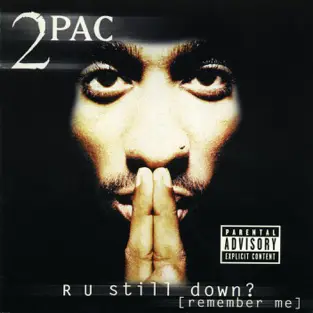
November 1997. Tupac has been dead for a little over a year, shot in Las Vegas, and I remember exactly how suspicious I felt when I first saw the cover of R U Still Down? (Remember Me) in the record bins. A posthumous double album, already. We all knew how that story usually goes: labels scraping the bottom of the vault, producers gluing scraps of vocals onto beats built after the fact. I was wrong to be suspicious. And that, precisely, is what makes this record stand apart in the posthumous catalogue.
A record released by his mother, not by a machine
Context matters enormously here. R U Still Down? came out on November 25, 1997 on Amaru, the label founded by Afeni Shakur, in partnership with Jive. Amaru was Tupac’s real middle name. That isn’t a marketing detail: this was his mother taking back control of her son’s legacy after the Death Row years and the legal chaos that followed his death. To understand the role she played in everything that came next, the good and the bad, I’ll point you to my portrait of Afeni Shakur.
What the record contains are recordings from the 1992-1994 period. In other words, sessions contemporary with Strictly 4 My… and the Thug Life adventure, with a few traces reaching back to the aftermath of 2Pacalypse Now. Tracks that stayed in the can, left off the tracklists of the day, sometimes for lack of space, sometimes because Tupac was moving faster than his own release schedule could handle. The man recorded at a pace that defies comprehension, and these tapes were simply sleeping.
Why “honest” is not an empty word
The great difference from what came later, and I go into this at length in my piece on Until the End of Time, is the absence of heavy additional production. No guest verses bolted on by rappers Tupac never met in a studio. No instrumentals rebuilt from the ground up to sound “current.” What you hear is, to a very large extent, what existed on tape, touched up only as much as publication required.
The result is a snapshot. You hear the Tupac from before Death Row, before prison, before the terminal paranoia of The Don Killuminati. A rapper of twenty-one, twenty-two, still under construction, swinging between the social fury of his early work and the melancholy that would erupt on Me Against the World. It’s uneven, inevitably. A double album pulled from studio offcuts can’t have the coherence of a record conceived as one. But it’s uneven the way a sketchbook is uneven: every page tells you something true about the hand that drew it.
Do for Love and I Wonder If Heaven Got a Ghetto
Two tracks carried the record, and they earned their status. Do for Love, built on a Bobby Caldwell sample, shows Tupac the seducer, clear-eyed about romantic entanglements, working that bittersweet vein he handled better than anyone in nineties rap. The video, with its claymation Tupac, had something gently unreal about it: a dead man being animated, literally, and nobody yet grasped how much that image foreshadowed what the exploitation of the catalogue would become.
I Wonder If Heaven Got a Ghetto still wrecks me. Recorded years before his death, the song asks about the afterlife, about poverty, about whether his people would have a place in some hypothetical paradise. Hearing it in late 1997 was unbearable and magnificent at once. The track had already existed in another form back in his early days, and this reworked version stands among the absolute peaks of his posthumous discography. If you were to keep only two songs from the record, it would be these, but you’d be missing some lovely things tucked into the corners of the second CD.
The only posthumous album with almost no caveats
I’m weighing my words. In my guide to the posthumous albums, I sort the post-1996 releases into three categories: faithful documents, hybrid objects, and products of exploitation. R U Still Down? is the only double album that sits firmly in the first category. My single reservation, and it’s an honest one, is length: twenty-six tracks is a lot, and the period documented is not the one of his full artistic maturity. Whoever discovers Tupac through this record will hear neither the summit of 1995 nor the deluge of All Eyez on Me.
But that’s exactly the point: this isn’t a record for discovering, it’s a record for going deeper. If you’re just starting out, go through my guide on where to start first. If you already know the four albums released in his lifetime, R U Still Down? is the natural next step, the one that fills the gap between 1993 and 1995 and lets you hear an artist in the act of becoming himself. No other posthumous release will give you that with this much integrity. His mother published a legacy; others, later, managed a revenue stream. You can hear the difference from the very first listen.
#posthume#1997#Afeni Shakur#discographie