Listening guides
The Don Killuminati: The Testament Under a Pseudonym
By Selim Rochat · 8 July 2026 · 5 min read
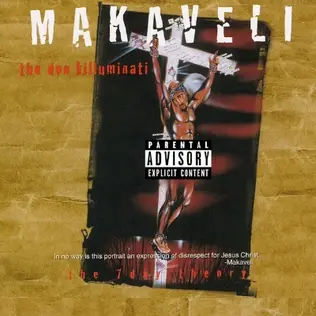
There are records you listen to and records that stare back at you. The Don Killuminati: The 7 Day Theory belongs to the second kind. I bought it on release, in November 1996, in a strange state of mind that anyone who lived through it will recognize: the man had been dead for less than two months, and his voice was coming out of the speakers as if he had foreseen it all.
One week in August 1996
The facts first, because they are dizzying. The album was recorded in August 1996, in roughly one week, hence the subtitle The 7 Day Theory. Studio legend has it that the vocals were laid down in three days and the mixing wrapped right after. Even allowing for the natural exaggeration of period accounts, the pace remains staggering. Tupac was working like a hunted man by then, which is what he had become.
On September 7, 1996, he is shot multiple times in Las Vegas, leaving a Mike Tyson fight. He dies on September 13. The album comes out on November 5, 1996, less than two months later. That timeline has fed every conspiracy theory imaginable, and I’ll come back to it. Above all, it turned a war record into a testament.
Makaveli, the Machiavellian mask
Tupac doesn’t sign this record with his own name. He becomes Makaveli, his personal spelling of Machiavelli, whose book The Prince he had read in prison. The choice is anything but anecdotal. Machiavelli is the theorist of cunning, of power seized and held by any means, and also, in Tupac’s reading of him, the idea of feigning in order to strike harder. Some fans saw in it, after his death, proof of a staged disappearance. I don’t play that game. What the pseudonym really says is that an artist at war invents a strategist double for himself, colder and harder than Tupac Shakur.
A word about the cover, which I’ll describe only in broad strokes out of respect for those it still wounds: it shows Tupac as a crucified figure, painted by Ronald Brent, known as Riskie. On release, the image caused a scandal. Yet the liner notes spelled out the intent: a crucifixion by the media, not a blasphemy. Published after his death, it took on a charge nobody had anticipated.
A bunker sound
Musically, we are at the opposite pole from the sunlit opulence of All Eyez on Me. No more big names; Dr. Dre had left Death Row and was no longer welcome. The production rests on craftsmen from the shadows, Hurt-M-Badd and Darryl Harper first among them, and that starkness gives the record its color: menacing keyboards, near-liturgical choirs, basslines that prowl. A bunker sound.
And that voice. Hoarser than ever, worn down, in a hurry. On Hail Mary, the most haunted track on the record, Tupac raps the way you recite a prayer before an assault, over a skeletal beat of terrifying efficiency. Bomb First opens the album as a pure declaration of war, and Against All Odds, which closes it, settles scores with the precision of a court transcript, names named, grievances listed. No other Tupac record goes this far into frontal attack.
Yet there are moments to breathe. Me and My Girlfriend spins out the metaphor of a weapon loved like a woman, a brilliant stylistic exercise that Jay-Z and Beyoncé would revisit years later in their own way. Krazy and White Man’z World reconnect with the social introspection of Me Against the World, and To Live and Die in L.A., almost gentle, gives the record its single ray of sunshine, a love letter to a city that nonetheless ground him down.
At the heart of the East/West wars
You cannot listen to this record outside its context. By 1996, the conflict between Death Row and Bad Boy Records, between Los Angeles and New York, had long since passed the stage of verbal sparring. Tupac is convinced the East Coast was tied to the ambush he survived in 1994, and The Don Killuminati is his final act of retaliation. The Notorious B.I.G., Puff Daddy, Mobb Deep, Nas, almost everyone gets hit, even if the relationship with Nas would ease just before Tupac’s death.
Heard today, this side of the record is uncomfortable, and it should be. Six months after its release, Biggie was murdered in turn. These tracks document a machine of destruction nobody managed to stop. That is also why they must be heard: not to pick a side, thirty years later, but to understand what that era cost.
Why to listen to it last
In my listening order, I place The Don Killuminati third, after Me Against the World and All Eyez on Me. It’s not a matter of quality; some consider it his best album, and I understand the argument. It’s a matter of meaning. The record only delivers its full power if you already know the man: the son of a Black Panther laid bare in 1995, the vengeful conqueror of 1996. Only then do you register the drop in temperature, hear what is new in that hoarse voice, understand that Makaveli is not merely a pseudonym but a final character.
It is also the last album Tupac conceived entirely while alive. Everything released afterwards belongs to another logic, that of vaults and estates, which I lay out in my guide to the posthumous albums.
As for editions, the original single CD, twelve tracks, remains perfect. The vinyl has been officially reissued several times and is easy to find; it is by far the finest way to own this record. Twelve songs, under an hour. One black night, shot through with lightning. You come out of it stunned, and you never again forget the date of September 13, 1996.
#makaveli#the don killuminati#death row#1996#guide d'écoute