Close readings
Dear Mama, a full reading: the debt that cannot be settled
By Selim Rochat · 9 July 2026 · 20 min read
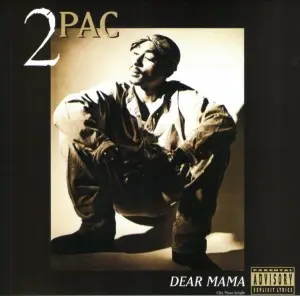
Dear Mama is one of the most important songs Tupac Shakur ever recorded because it exposes the other face of his work. The same artist who could build a persona as a gangster, an armed survivor, a street soldier or a sexual provocateur writes here a song of filial love, shame, gratitude and repair. The track does not deny the violence of Tupac’s world. It sets that violence before an older, deeper figure: the mother.
The mother in question is Afeni Shakur, a Black American activist and former member of the Black Panther Party, the revolutionary Black organization most active in the 1960s and 1970s. She knew prison, poverty, political surveillance, drug addiction, and then motherhood under punishing conditions. To understand Dear Mama, you have to know that Tupac isn’t just writing a universal song about his mom. He is writing to a poor Black woman, politicized, damaged, brave, sometimes failing, but never fallen in his eyes.
The song appeared in 1995 on Me Against the World, produced by Tony Pizarro, over a soul groove built from Sadie by the Spinners and an interpolation of In All My Wildest Dreams by Joe Sample. In 2010 the Library of Congress added it to the National Recording Registry, which preserves recordings judged culturally significant: a rap song about a mother addicted to crack entered the official heritage of the United States.
The song’s opening statement is very simple: it tells the mother that her worth is finally being seen, that her son values her. It is a sentence of repair. Tupac doesn’t open by recounting his own pain. He opens by giving his mother what poverty, drugs, arguments, the state, absent men and the street all refused her: recognition.
The first verse: starting with the conflict
And yet the first verse starts with conflict. When Tupac recalls that, as a teenager, he and his mother had a beef, he reaches for a word of quarrel, of tension, of lasting friction. He doesn’t begin with the idealized image of a flawless mother. He begins with the truth of a damaged relationship: arguments, anger, misunderstanding, being put out of the house. At seventeen, he finds himself on the outside. The song is born of a contradiction: the woman he celebrates is also the woman with whom he fought a domestic war.
That honesty is essential. Dear Mama is not an easy, sentimental tribute. Tupac never claims that everything was sweet, everything beautiful, his mother beyond reproach. What he says instead: there was anger, poverty, fear, injustice, drugs, mistakes, yet no other woman could ever have taken her place. The song doesn’t erase the wounds. It walks through them.
The idea that no living woman could ever stand in for his mother carries particular force within Tupac’s body of work. In his songs, women are often portrayed in contradictory ways: sometimes as sexual objects, sometimes as betrayers, sometimes as victims to protect, sometimes as figures of dignity. In Dear Mama, the mother sits above every other female figure. She is irreplaceable because she belongs to the very origin of the self.
Tupac then turns to school, the suspension, the dread of going home. The child is already caught between competing authorities: the school, the street, the mother, the older boys who break the rules. He describes himself as reckless, a kid drawn to the bigger boys who lived outside the lines. He doesn’t present himself as innocent in any pure sense. He owns his share of the disorder. But it is the disorder of a poor child pulled too early into adult structures.
Then the little sister appears. She matters because she widens the memory: the poverty isn’t merely individual. It is a family condition. Tupac and his sister cry together. They have less than the other kids. The pain becomes something shared between siblings. The song isn’t only the story of a son at odds with his mother; it’s the story of a household that lacks everything and goes looking for someone to blame.
The line about different fathers and a shared misfortune is remarkably dense. It says that the children do not necessarily share a father, but they do share the same instability, the same poverty, the same absence, the same hurt. The problem isn’t just one missing man. It’s a family structure fractured by precarity, breakups, prison, the street and male abandonment.
When things fall apart, the children turn on the mother. This is one of the verse’s most important admissions. Tupac owns up to an intimate injustice: the poor child often blames the only person present for what the absent ones and the system produced. The mother absorbs the anger because she is there. The absent father, the state, poverty, racism, unemployment, drugs, the police, all are less within reach. The mother becomes the target because she is the daily presence.
Tupac then recalls the stress he caused. He calls that period hellish. The scene of an embrace given from inside a jail cell is central. Prison enters the song very early. It doesn’t arrive as a surprise. It appears as a destiny almost foretold. The son who made his mother cry ends up holding her from within a space of confinement. Tenderness has to pass through the punitive institution.
The rhetorical question contrasting grade school with the penitentiary is among the strongest moments in the text. Who could have imagined that a boy in elementary school would one day see the inside of a prison? That question condenses the whole social tragedy of Tupac’s life. The passage from childhood to incarceration feels at once absurd and predictable. Absurd, because no child should have that destiny. Predictable, because the world the song describes makes that destiny close to normal.
He then recalls running from the police and the punishments his mother handed out. She hits him or disciplines him to pull him back into line. That educational violence belongs to its context. It is not presented as pure cruelty. It is a desperate attempt at discipline in a world where the child is already being swallowed by the street. The mother has few tools. She has her body, her anger, her fear, her domestic authority.
The black queen inside addiction
The most famous and most delicate moment of the first verse arrives when Tupac addresses his mother’s crack addiction. He uses the harshest, most stigmatizing word there is for a woman with a drug habit, then immediately adds that she never stopped being a black queen. That juxtaposition is capital. In a racist, class-bound America, a poor Black woman addicted to crack can easily be reduced to her addiction, her fall, her incapacity. Tupac refuses the reduction. Even inside the addiction, she remains a black queen.
Here the song performs a major poetic and political gesture: it restores the dignity of a woman whom everything conspired to degrade. Addiction does not cancel motherhood. Poverty does not cancel greatness. Social failure does not cancel nobility. Tupac doesn’t lie about the drugs; he simply refuses to let them have the last word on his mother.
He then says that he finally gets it. That moment of comprehension is the true pivot of the verse. The accusing child becomes an adult capable of rereading the past. Understanding doesn’t mean excusing everything. It means placing the failures back inside concrete conditions: being a woman alone, poor, Black, on public assistance, trying to turn a boy into a man. The acknowledgment of how hard it is to raise a man matters enormously. It recognizes that the mother had to produce a masculinity without any stable male partner.
When he wonders aloud how she managed it, he isn’t looking for an answer. It is a question of admiration. How did a single mother, poor, supported by welfare, manage to feed, protect, raise, endure, love? The miracle isn’t religious in any strict sense. It is a daily miracle. It lies in the sheer fact of having held on.
The idea that there exists no way to settle what he owes her returns like a moral refrain. Money, gifts, fame, jewelry cannot buy back the childhood, the nights, the labor, the fears, the improvised meals, the acts of forgiveness. All the son can do is show that he understands. Comprehension becomes the only form of payment available.
The sung hook brings in a collective voice. It turns toward the woman being honored and wonders whether the affection surrounding her has ever truly registered. It no longer speaks to Afeni alone. It widens Tupac’s mother into every mother like her: poor women, women alone, worn out, rarely acknowledged, loved yet so often blamed. The hook’s softness turns a personal testimony into a collective tribute.
The second verse: the absent father and the thugs who loved him
The second verse opens on a hard premise: nobody ever told them life would treat them fairly. It reads almost like a law of the world according to Tupac. Injustice isn’t accidental. It is the climate in which children grow up. The line sets the stage for the theme of the missing father.
Tupac states that he holds no love for his father, cast as an absent coward. You have to know that Tupac’s biological father, Billy Garland, played no day-to-day paternal role in his childhood. Tupac grew up mostly with his mother, in an unstable environment. In the song, the father is not a complex character. He is an absence. And that absence breeds a rage.
When he recounts hearing of his father’s death and shedding no tears, he isn’t bragging about being cold. He explains that his anger left him unable to feel anything for a man who was, in effect, a stranger to him. That word is decisive. The father is biologically connected but emotionally foreign. The song thereby shows that fatherhood is not a simple biological given. It requires presence.
Tupac concedes that some people call him callous or heartless. Then comes the correction: all that time, what he was really doing was searching for a father figure. The sentence changes the whole reading. The son’s hardness is not an absence of love; it is love with nowhere to land. He wanted a father and never found one. Anger is the shape the lack took.
This is where the thugs enter the text. Tupac runs with hoodlums, delinquents, dealers. But he specifies that even though these men sold drugs, they showed him real affection. That sentence is fundamental to understanding his entire body of work. Tupac isn’t simply romanticizing criminals. He is explaining why a young boy can grow attached to them: they offer recognition, protection, belonging, male role models, attention. Where the father is missing, the street supplies brothers.
None of this makes the street innocent. But it makes its pull comprehensible. Dear Mama shows that criminality isn’t born of individual wickedness alone. It also grows out of unmet emotional needs. The boy joins the thugs because they give him what the institutions and the fractured family fail to provide in sufficient measure: a place. That is already the entire thesis of Tupac the sociologist.
He then recounts leaving home, hanging out in earnest, needing money of his own, and starting to deal. The slang verb he uses means selling drugs. Tupac doesn’t hide the activity. But he frames it within a logic of necessity and family contribution. He describes feeling no guilt about moving rocks, meaning crack, because slipping cash into his mother’s mailbox brought him a kind of peace.
This is one of the most morally complex passages in the song. Tupac never claims that selling crack is good. He says that, in his situation, dirty money could be experienced as an act of filial love. Crime becomes a way to cover the rent, to help the mother, to repair the powerlessness of the poor child. That tension sits at the heart of his art: social evil can produce gestures of private tenderness. And the tragic irony escapes no one: the son of an addict is selling the very substance destroying his mother.
The passage about rent is intensely concrete. He relishes covering the rent right when it comes due. This is no abstract image of success. It is the pleasure of relieving his mother at the exact moment the material threat returns. Rent is one of poverty’s simplest and most brutal forms: every month, you must prove you can stay in your own home. Paying the rent buys a little peace.
The diamond necklace he sends his mother belongs to another logic: symbolic compensation. A woman who worked with scraps, who carried the family through poverty, finally receives a luxury object. The jewel erases nothing, but it makes recognition tangible. It says: you deserved more than the crumbs.
The domestic miracles
Tupac then returns to the maternal presence. When he hit bottom, she was there. She never left him alone. She looked after him. The sentence is plain but decisive: the mother is defined not by her perfection but by her constancy. Even damaged, even poor, even addicted, even overwhelmed, she was there. In Tupac’s universe, presence outranks purity.
The scene of the mother coming home late from work and trying to put together a hot plate for her children is among the most beautiful in the song. It condenses domestic heroism. No public glory, no grand speech, no visible victory. Just a tired woman, a kitchen, children, a few leftovers, and the effort to produce a meal. The miracle lives inside that modesty.
The image of miracles worked at Thanksgiving is remarkable. Thanksgiving is the American holiday of the family table, abundance, gratitude. For a poor household, pulling off Thanksgiving with next to nothing borders on the miraculous. Tupac elevates survival cooking to the rank of wonder. The mother has little, but she turns leftovers into a feast.
The verse then dwells on the mother’s solitude. The road grows hard. She is alone. She is trying to raise two difficult children. Tupac doesn’t dodge his responsibility: he admits they were complicated kids, unruly, maybe ungrateful. But the mother’s greatness shows precisely there. She wasn’t raising angels in a stable world. She held on facing wounded children in a hostile one.
The second verse, too, circles back to the impossibility of settling the debt. The repetition is necessary. The whole work says: money matters, gifts matter, success matters, but none of it repays a mother. The debt is infinite. The song is not the payment; it is the confession that payment is impossible.
The third verse: sweetness added to the chaos
The third verse opens with a ritual gesture: tipping out a little liquor in remembrance. In hip-hop culture and in many street contexts, the gesture honors the dead or the absent. Here it opens a space of memory. Tupac remembers through the wreckage. Even in the darkest stretches, he could count on his mother.
The mother then appears as a recentering force. When he feels lost, she finds the words that set his head straight. That function matters. The mother is not only a provider. She is also a psychic guide. She steers the son back toward himself when he scatters into violence, fear, fame, prison or the street.
He then turns to childhood illness. When he was small and sick, she did everything in her power to make him happy. The memory shifts the song toward a prepolitical, almost universal tenderness: the sick child, the mother keeping watch, the outsized efforts to coax out a smile. Tupac grants his mother a greatness that needs no great event. It lives in ordinary patience.
His childhood memories brim with the sweet things she did for him. That sweetness matters, because the song began with arguments, the street, prison, drugs. Tupac doesn’t swap one version for another. He adds the sweetness to the chaos. The childhood was hard, but it was not empty of love.
Even when he acts out of control, he thanks God that she brought him into the world. The line runs deep. He knows himself to be unstable, violent, excessive, at times self-destructive. Yet he gives thanks for his existence anyway. The mother is the mediation between God and his own life. Through her he was given to the world, pain and all.
He then admits that no words can capture what he feels. It’s a classic formula, but in Tupac’s mouth it takes on a particular meaning. A man who lives by words concedes here a limit of language. The rapper, the poet, the man of speech admits that the debt to the mother exceeds speech itself. The song exists in spite of that insufficiency. It is an attempt to say what can never be fully said.
The observation that she never kept secrets from him and always stayed real points to a core value of rap: authenticity. Being real means being true, loyal, direct, free of hypocrisy. Tupac applies to his mother a category usually reserved for men of the street. She is real because she never played him false. She showed him the truth, even when it was harsh. She never sold him an illusion.
He then gives thanks for the way she raised him and for the extra love she poured into him. That surplus matters. A poor mother has to give more than she has. She is short on money, time, stability, perhaps health, and still she delivers an emotional surplus, beyond her means.
The wish to lift her pain away is one of the most tender moments in the text. Tupac would like to do for his mother what she did for him: absorb the suffering, lighten the load, mend the world. But he cannot. He can only write, give, acknowledge, and promise a light.
The promise of a brighter day for whoever makes it through the night belongs to Tupac’s philosophy of survival. Getting through the night means getting through poverty, drugs, prison, loneliness, despair, grief. The brighter day isn’t guaranteed in any naive way. It’s held out as a necessary horizon. To survive, you have to believe that one night is not all of time.
The song then says that things will hold together if you can endure, but that the struggle starts over every single day. It’s one of the deepest tensions in Tupac: hope and lucidity at once. He promises that things can improve, and he refuses to lie about the fight being daily. He offers no cheap consolation. He offers a survival instruction: hold on, keep moving.
The final return of the idea that the debt cannot be repaid closes the loop. Everything has been said: the arguments, the eviction, school, the police, prison, drugs, the missing father, the dealers, the rent, the late shifts, the meals, the sickness, the pain, the gratitude. And still the conclusion stands: nothing repays a mother. The only offering possible is understanding.
The final hook widens the address once more. The gentle female figure of the refrain no longer names Afeni Shakur alone, but every woman who carried children through impossible conditions. The song becomes a hymn to poor mothers, Black mothers, mothers on their own, mothers imperfect but present.
The refusal of black-and-white thinking
The power of Dear Mama lies in its refusal of moral simplification. The mother struggles with crack, yet remains a black queen. The son sells drugs, yet wants to pay the rent. The hoodlums deal, yet give love to a boy abandoned by his father. Prison is a disgrace, yet it produces an embrace. Poverty destroys, yet it reveals domestic miracles. Nothing is pure. Everything is mixed.
The song is also a correction to Tupac’s public image. In other tracks he can style himself thug, ridah, menace, player, armed man, aggressive survivor. In Dear Mama he shows himself as a son. Not a perfect son, but one capable of regret, recognition and memory. The stance is essential: the gangster becomes a child again. The hard persona cracks open in front of the mother.
Poetically, Dear Mama rests on a plain, narrative, intensely concrete language. Tupac isn’t hunting for refined imagery. He names the school, the street, the cell, the kitchen, the rent, the mailbox, the necklace, Thanksgiving, the tears. His poetry comes from emotional precision, not ornament. He writes like someone who knows that the true symbols of the poor are usually ordinary things: a hot meal, rent paid on time, a mother coming home late, a mailbox with money inside.
The song is built as a conversion of the gaze. At the start, the child accuses his mother. By the end, the adult understands. That transformation is the moral heart of the text. The mother doesn’t fundamentally change; it is the son’s way of seeing that changes. He finally perceives what he could not perceive as a child: the effort, the loneliness, the constraints, the courage, the love hidden under exhaustion.
Dear Mama never claims that maternal love wipes out the failures. It says that certain failures must be understood within a larger story. An addicted mother can have been a loving one. A poor mother can have been heroic. An overwhelmed mother can have worked miracles. A relationship of conflict can become, with time, a relationship of gratitude.
The underside of the armor
Within Tupac’s work, this song stands as a summit because it gathers his great obsessions without converting them into a warrior’s pose: poverty, the absent father, prison, the street, drugs, family, memory, Black dignity, a love that can never be repaid. Everything that elsewhere becomes rage becomes, here, recognition.
Set against Ambitionz Az a Ridah, Dear Mama is the underside of the armor. In Ambitionz Az a Ridah, Tupac comes back from prison as a hard man, ready to face the police and his enemies. In Dear Mama, he comes back to the family cell, to the mother, to the child he once was. In Hit ‘Em Up, the wound becomes attack. In Dear Mama, the wound becomes gratitude. In I Ain’t Mad at Cha, he accepts the ways his friends have changed. In Dear Mama, he finally acknowledges what he owes the one who stayed.
So the song is far more than a Mother’s Day number. It is a meditation on debt. An emotional, social, moral debt that can never be cleared. Tupac cannot give his mother back the lost years, the anxieties, the nights, the improvised meals, the prison visits, the tears. He can do exactly one thing: declare her worth in public.
That public act of gratitude matters. In a world that renders poor mothers invisible, Tupac turns his mother into a monument. He doesn’t whitewash her. He doesn’t make her respectable in any bourgeois sense. He says the opposite: even with the drugs, even with the poverty, even with the fights, even with the welfare checks, even with the appearance of failure, she was a black queen. The song stands as proof.
The opening dedication is therefore more radical than it looks. It doesn’t only mean thank you, mom. It means: the world never saw you, I see you. The world judged you, I understand you. The world reduced you to your flaws, I restore your greatness. The world left you alone with children, I acknowledge that you achieved the impossible.
Dear Mama remains one of Tupac’s most powerful texts because it proves that his poetry doesn’t run on anger alone. It runs on his ability to look at contradictions without flattening them. He can love a mother who hurt him. He can recognize an addicted woman as a queen. He can confess his shame without disowning the street that shaped him. He can speak the fault and the love in a single sentence.
The song therefore ends not on a solution but on an acknowledgment. The poverty isn’t erased. The father never came back. The prison isn’t undone. The drugs haven’t vanished from the past. The wounds remain. But a word has been laid over them: her son sees her worth at last. In Tupac’s universe, where so many relationships end in betrayal, death or revenge, that word is a rare form of peace.
#lecture#me against the world#afeni