Close readings
Ambitionz Az a Ridah, a full reading: the armor of the comeback
By Selim Rochat · 9 July 2026 · 21 min read
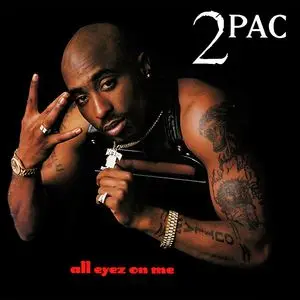
Ambitionz Az a Ridah is one of the most important texts for understanding the Tupac of All Eyez on Me. The track opens the album. That choice is decisive. This is not a song dropped at random into the tracklist. It serves as a declaration of identity. After prison, after the 1994 shooting, after signing with Death Row Records, Tupac returns with a voice that is harder, more menacing, more spectacular. All Eyez on Me, released on February 13, 1996 by Death Row and Interscope, is his fourth studio album and the last to appear in his lifetime. Ambitionz Az a Ridah was produced by Daz Dillinger and carries a sample of Pee-Wee’s Dance by Joeski Love. The track was recorded at Can-Am Studios in Los Angeles on October 13, 1995, shortly after Tupac walked out of prison.
The central word: ridah
For an uninitiated reader, everything starts with the central word: ridah. In standard English, a rider is simply someone on a horse or behind a wheel. In the slang of rap and the street, a ridah is someone who rolls with his camp, who takes action, who stays loyal, who is ready to face the police, enemies, prison or death. The word carries motion, fidelity, attack, courage and criminality all at once. To declare yourself a ridah without qualification is not merely to claim you drive or that you’re tough. It means: I am fully committed to this life, I do not back down, I am prepared to do whatever this identity demands.
The intro is staged like an entrance into a boxing ring. The presence of Michael Buffer, the famous fight announcer, and his celebrated ring call is not decorative. It turns the track into a bout. Tupac does not begin by narrating. He steps into the arena. The song becomes a match, but a match where the blows are not merely athletic. Police, street, money, women, enemies, death and survival are all in play. The Michael Buffer reference thus frames the track inside a dramaturgy of public confrontation.
The opening line, repeated, is a refusal to deny anything. Tupac does not defend himself. He makes no bid for respectability. He publicly assumes the ridah persona. That sentence answers, implicitly, every accusation ever thrown at him: violent, thug, dangerous, criminal, provocateur, uncontrollable. Instead of refuting the charges, he flips them into a coat of arms. This is a core rhetorical move in Tupac’s work: turning the accusation into a crest.
What follows says that nobody truly wants to come after him. He asserts that police fire on him, yet their bullets leave a G fundamentally untouched. The G here is the gangster, the genuine man of the street, the one who holds up under pressure. Police matter enormously in Tupac’s imagination. They stand for the state, institutional violence, the surveillance of poor Black people, arrest, humiliation, permanent threat. But in this hook, they are also rendered powerless. Even when they shoot, they cannot reach the essence of the character.
The maxim M.O.B., which ranks money ahead of women, sums up one of the hardest and most troubling aspects of the track. It is the creed of a player, a symbolic pimp, a brutal capitalist survivor. It belongs to the sexist vocabulary of 1990s gangsta rap. Say it plainly: this logic reduces women to distractions, risks, objects of pleasure or sources of betrayal. Yet within the text it also works as a principle of discipline: never let anything pull you off the economic objective.
The first verse: scars riding in luxury
The first verse opens on a striking image: the marks of a war zone carried around inside expensive automobiles. The whole contradiction of the All Eyez on Me Tupac is right there. Luxury does not erase the war. The cars are comfortable, costly, gleaming, but the bodies inside them bear the traces of violence. Tupac is not describing a peaceful success. He describes a success that is armored, pursued, haunted. The rap star lives in upholstered comfort with a soldier’s memory.
When he says the rap star’s life amounts to nothing unless someone is watching your back, he demolishes the naive image of celebrity. The star is not free. The star is exposed. The star needs protection. In Tupac’s case, this is not merely a metaphor. After the shooting of 1994, after the public feuds, after prison, fame becomes a zone of danger. To be visible is to be aimed at.
He then presents his hardness as something issued at birth. That origin is almost mythological. Tupac does not claim he became hard by aesthetic choice; he presents toughness as an original condition. He addresses the wide public, but with an attitude of refusal, a middle finger raised at the world that is more than vulgarity. It is a philosophy of survival: when the world is hostile, sometimes you move forward without asking permission.
The observation that the public loves this attitude matters. Tupac knows his violence is consumed. He knows the industry and the audience enjoy watching a Black man embody transgression, rage, danger. There is already an implicit critique of spectacle here: what destroys him is also what sells him. The public wants the uncontrollable Tupac. Death Row and the rap market capitalize on that image.
The passage about the soldier who must hold his nerve clarifies the discipline behind the violence. Being a soldier does not only mean shooting or insulting. It means keeping composure, controlling the nerves, staying steady under pressure. The ridah is not simply a raging madman. He must be able to act coldly, even inside a complicated life.
Tupac then asserts that life may be tangled, but its shape depends on what you build from it. That sentence cuts against the apparent fatalism of the rest. It introduces a share of individual responsibility. Even in a violent world, even under pressure from police and enemies, there remains a way to fashion yourself. Ambitionz Az a Ridah is therefore not merely a text of grievance. It is a text of self-construction.
The title then resurfaces inside the verse: his ambitions as a ridah. Ambition is a significant word. The track is not only a celebration of violence. It speaks of a project. Tupac wants to rise, win, survive, dominate, take revenge, be recognized, never be poor again, never be humiliated again. The ridah is not merely a criminal; he is a man who converts violence into trajectory.
The sexual passage that follows is brutal. Tupac describes the conquest of a woman as a quick, cynical, almost mechanical episode. He talks to her, takes her to a hotel, puts the money, the car, the status on display. The woman is not treated as a subject. She is folded into the apparatus of masculine domination. The passage is morally ugly, but it shows the persona’s coherence: the ridah must stay locked on money and power while using desire as proof of prestige.
The mention of the Benz and the cash indicates that sexuality here is welded to material success. The female body validates masculine status. The car, the money, the hotel and the street idiom form a single symbolic system. In this poetic economy, seducing, possessing, driving, smoking and paying are all signs of power.
The high-grade cannabis, the feeling of sitting on top, then the address from one player to another place Tupac inside a community of players. The player is not merely a seducer. He is someone who knows the social game, who can manipulate appearances, read interests, negotiate desire and money. The game leaves no slack: the rules are harsh, mistakes cost dearly, everyone is trying to win.
Tupac then moves from prayers and the hustle to the idea of making others pay. The transition is meaningful. The track’s world mixes spirituality, economic survival and violence. Prayers do not replace the hustle. They coexist with it. The character prays, sells, desires, threatens, laughs, protects himself. This is a contradictory consciousness, not a simple moral model.
When he claims no time remains for women because they supposedly tried to run schemes on him and his men, he circles back to a generalized distrust. Women are cast as suspect, self-interested, dangerous to the money and the focus. This misogyny is structural in the track. It cannot be minimized. It belongs to the claimed hardness, but it also reveals a fear: the fear of being manipulated, drained, betrayed, pulled off course.
The mission of the meal ticket is a central expression. The meal ticket is what lets you eat, live, climb out of poverty. Tupac is on a campaign for his million. The dream is not abstract. It is countable, vital, almost alimentary. Money is not just luxury; it is protection against a return to misery.
Competition tires and irritates him, but it also feeds him. Rap here is an economic battlefield. Competitors, the envious, labels, self-interested women, enemies: everyone contributes to a constant pressure. Tupac says he will keep writing rhymes regardless. Writing becomes a weapon of endurance. He stays in the game because the word is his way of surviving.
The old formula that glory demands courage sums up the track’s ethic. It is a morality of risk. Glory is not received; it is seized. It requires exposure, violence, audacity, danger. Within this logic, prudence looks like weakness.
Death Row, the fortress
The line about Death Row is essential context. Death Row Records is the Californian label run by Suge Knight, associated with West Coast gangsta rap, with Dr. Dre, Snoop Dogg, Tha Dogg Pound, then Tupac. After prison, Tupac joins Death Row. In the track, he presents this choice as an answer to his distrust of the industry: since the business people cannot be trusted, he places himself with Death Row. All Eyez on Me is precisely the album of that alliance.
Within the text, Death Row operates as an armed refuge. It is not merely a label. It is a symbolic fortress. The very name evokes the corridor of the condemned. The label gives Tupac an aesthetic of institutionalized danger. He is no longer only the wounded artist of Me Against the World; he becomes the champion of a machine that is more aggressive, more luxurious, more threatening.
Women drawn by the money then turn suspect. They plot, plan, try to set traps. The world is made of hidden schemes. Tupac lives under a regime of suspicion. Anyone might want his fortune, his body, his name or his downfall. Wealth does not produce tranquility. It produces a new paranoia.
The ridah’s answer is vigilance: attentive, prepared, on watch. Tupac names Syke and Bogart, members of his circle, and presents all of them carrying weapons that same night. Loyalty, in other words, is armed. The group defines itself not by sentimental brotherhood but by readiness for danger. Friends are the ones who stay prepared when trouble arrives.
The end of the first verse asserts that his enemies are jealous because, deep down, they want to be him. This is a recurring idea in Tupac. The adversary does not merely hate; he envies. He attacks because he wants the position, the aura, the power, the freedom of the character. Tupac thus converts the hatred he receives into proof of greatness. If others despise him, it is because they wish they were him.
The hook returns with its hammered formula. He denies nothing. He is a ridah. Provoking him is a mistake. The police shoot, yet a G remains beyond their reach. The repetition works like an oath. With each return of the hook, the identity hardens. The track does not progress toward another truth; it drives the same truth deeper into the sound.
The second verse: better to die free
The second verse opens with the desire to rise above the envious. But this elevation is not peaceful. When the moment comes to roll out, he leads the way to the vehicle and calls for the pistol. Social climbing and departure for combat blur into each other. He does not rise out of the violence; he rises through it.
The request for the 9 indicates a handgun. The text converts urgency into an action scene. Tupac stands ready to die on the spot. The line is bravado and suicidal impulse at once. It says: better to fall fighting than to live captured, humiliated or beaten. This is one of Tupac’s great tragic themes: death is dreaded, yet folded into daily possibility.
When he calls himself hard to kill, he reaches back into his whole personal mythology of survival. Since the 1994 shooting, Tupac has built the image of a man the bullets could not close out. That image resurfaces across several tracks. It does not serve only to menace enemies. It serves to convert trauma into narrative strength.
He would rather die than let them take him. That sentence carries weight in the American context, particularly for a Black man who has already been through prison. Capture means police, courtroom, prison, the loss of one’s body, dependence on the institution. Tupac therefore poses an extreme alternative: die free and armed, or be taken by a system he hates. The track chooses the first option.
The call to his mother creates a rupture. In the middle of the bravado, Tupac pleads, in essence, for his mother to reach him, to pull him back before it is too late. This intrusion of the mother cracks the warrior persona. We glimpse the Tupac of Dear Mama, the one who remains a child before the maternal figure. But the plea is immediately bound to suicidal thoughts. The ridah is not only violent; he is mentally at the edge of the pit.
He asserts his innocence, yet promises gunfire if anyone comes to take him. That contradiction is central. He believes himself innocent in a moral or existential sense, yet stands ready to answer with violence. Innocence does not produce submission. It produces rage: since he considers himself unjustly hunted, he considers it legitimate to defend himself to the end.
The refusal of prison is explicit. Tupac has just emerged from an incarceration that marked his trajectory and his imagination. In the track, going back inside is worse than dying. The idea is tragic: the penal institution appears not as correction or justice, but as the erasure of a self.
The Tyson reference points to Mike Tyson, the American boxer, heavyweight champion of the world, convicted in 1992 and imprisoned, then returned to the ring after his release. Tupac was close to Tyson and recorded an alternate version of the track, Ambitionz Az a Fighta, for his comeback fight in 1995. In the text, the Tyson reference lets Tupac align himself with another famous Black man: violent, admired, convicted, then restaged as a fighter. The irony of history is well known: it was on the way out of a Tyson fight, in Las Vegas, that Tupac was gunned down.
The lifelong vow to the thug identity anchors the verse in Thug Life. For Tupac, Thug Life is never only a glorification of crime. It is also a way of naming the condition of the poor, of criminalized young Black men, of children manufactured by a violent system and then condemned for the violence they reproduce. But in Ambitionz Az a Ridah, that political dimension is absorbed into the fighting stance: if you believe in this life, you must be ready to die for it.
The line about choosing one’s own death is among the hardest in the track. When the end arrives, a man should decide the terms of his own exit. We are inside a stoic ethic deformed by the street: since death is inevitable, the one freedom left is deciding how to meet it. But this apparent nobility turns violent at once: peace is refused, and so are the police. The second verse thus closes on a doctrine. Peace rejected, police rejected, capture rejected, prison rejected. Only confrontation remains. The ridah is the man who refuses every mediation.
The third verse: the reincarnation
The third verse opens on an important idea: lyrics that can kill. Tupac does not separate writing from violence. His words move armed, carried by the ghosts of the street soldiers who lived and vanished before him. The image gives rap an almost ancestral dimension. He does not speak alone; he speaks with the dead, the elders, the figures of the street, all those who came before.
He says he must steer clear of the block and of the police, knowing they are coming for him. Fame has not called off the hunt. It has made it more visible. The character lives in anticipation of arrest, gunfire, the trap. Public space is dangerous. The street, once origin and territory, becomes a zone of capture as well.
He admits he hesitated to resurface, that he was gone for years, then announces his return. Historically, the line matches the Tupac who came back from prison and reinstalled himself in the rap landscape with extreme intensity. All Eyez on Me is the album of that massive return: a double album, maximum visibility, a tone at once triumphant and paranoid.
Adversaries brought to weeping belong to the logic of payback. Tupac does not merely want to survive. He wants those who doubted, schemed or laughed to feel it. He wants to convert their confidence into fear. It is the classic movement of the vengeful survivor: come back and make the enemies understand they did not succeed.
The line about methods and shifting pace signals adaptability. Tupac is not only frontal; he can vary rhythms, tactics, modes of attack. It is a musical image too: changing pace means changing flow, pressure, intensity. The ridah is strategist as much as soldier.
The image of himself as his mother’s child gone wrong is extremely powerful. There is deep guilt here. The mother, in Tupac’s work, is loved, sacred, suffering. To call himself the damaged issue of his mother is to acknowledge that he came from her but was spoiled by the world. He is not simply accusing his mother. He is saying that what the world made of her son is the corruption of something that might have been pure.
The reference to the bullets that failed to close him out returns once more. His enemies reached him, but stripped nothing essential from him. The line converts the shooting into a scene from the life of a Black and tragic superhero. The attempt at destruction enlarges the legend. The man you wound comes back more dangerous. Trauma becomes mythological fuel.
He then accuses cowards of having set him up, including men from his own camp. This idea of internal betrayal is essential to the Tupac of this period, the one I follow in the piece on the betrayals. The enemy is not only outside. He is also inside the team, inside the circle, inside proximity. That is what produces the paranoia: if even intimates can take part in the fall, then no one is fully reliable.
The idea of a return in reincarnated form gives the track its spiritual axis. Tupac is not simply saying he got out of prison. Prison, the shooting and the media disappearance become a symbolic death; the release becomes rebirth. This rebirth is not gentle. It is a reincarnation as threat.
He specifies that he was locked up while he pondered how God had arranged things. Prison becomes a place of contemplation. But this contemplation does not yield peace. It yields a tragic understanding of his mission: come back, write verses built to outlive him, become a hired gun of sound, make the enemies pay.
That figure of the musical mercenary matters enormously. A mercenary fights for money, not for a pure cause. Tupac thus presents himself as an armed artist, a professional of sonic warfare. He knows the industry pays for spectacular violence. For money, he can bury his enemies symbolically. The line is cynical, but lucid: rap is also a marketplace of confrontation.
The mail he received in prison plays an important role. He says many letters reached him urging him to come back ferocious, to demolish everything on record. This shows the public participating in the construction of the avenging Tupac. Listeners, fans, intimates, the industry: all await his return as a violent event. Tupac is not solely responsible for the persona; it is also demanded by those who want to watch him strike.
The invitation to witness the arrival of the realest is central. The word realest counts in rap. Being the realest is not merely being sincere. It means embodying, without distance, what you say. Tupac asserts that his history proves he has always been exactly that. Authenticity here is not an inner quality; it is certified by the past, the prison, the wounds, the feuds, the deaths all around him.
The close of the third verse returns to revenge against those who played him and the cowards who ran alongside them. To be played is to be manipulated, deceived, used, treated as a fool. Tupac cannot inhabit that position. The entire ridah persona consists of refusing to be the one who gets played. If he was played, he will return to reverse the situation.
The final hook repeats the identity to the point of saturation. This repetition is not informative. It is performative. By hammering the phrase, the track manufactures what it asserts. In the listener’s ear, Tupac becomes the man he describes.
A post-prison manifesto
For an uninitiated reader, Ambitionz Az a Ridah can look like nothing more than a glorification of violence, machismo, money and guns. That would fall short. The track does all of that, and none of it should be excused. Its misogyny is constant. Its fascination with weapons is explicit. Its refusal of peace is brutal. But it is also a text of return, of trauma, of prison, of paranoia, of dangerous celebrity, of Black rebirth in aggressive form.
The text is built on a series of tensions. Luxury against scars. Star against fugitive. Money against vulnerability. Mother against corruption. Police against G. Desired woman against suspected woman. God against musical mercenary. Prison against reincarnation. These contradictions are not accidental weaknesses. They are the heart of the track. Tupac offers no pure identity. He shows an identity forged inside contradiction.
The poetry of the track rests on hammering. Phrases return like slogans. The images are hard, immediate, physical: scars, cars, guns, bullets, prison, mother, blood, letters, money, bodies. Tupac does not write in abstraction. He thinks in scenes. He gives every idea a concrete surface.
The track is also a persona machine. It installs the Death Row Tupac: less introspective than on Me Against the World, more offensive, more spectacular, more dangerous. This is not to say the earlier Tupac disappears. The mother, the prison, the fear, God, the vulnerability are all still there. But they are caught inside a new armor. The tenderness is sheathed in leather, metal, money and menace.
Ambitionz Az a Ridah is therefore a post-prison manifesto. It says: I am back, I will deny nothing, I am what you fear, what you buy, what you accuse, what you tried to kill. The police can shoot, the enemies can scheme, the industry can exploit, women can betray, the jealous can talk: the ridah keeps moving.
Within the overall economy of Tupac’s work, this track is the opposite of a text like I Ain’t Mad at Cha. I Ain’t Mad at Cha accepts change with melancholy. Ambitionz Az a Ridah refuses appeasement and chooses warrior reincarnation. In Hit ‘Em Up, the wound becomes a targeted attack on named enemies. In Ambitionz Az a Ridah, the wound becomes a global identity. It is not one particular adversary in the crosshairs. It is the entire world placed before the return of a wounded man. On the same album, 2 of Amerikaz Most Wanted shows the festive side of this return, with Snoop Dogg at his side.
The track’s troubling greatness lies exactly there. It is morally hard, often ugly, sexist, paranoid, violent. Yet it is poetically effective because it condenses, in a few minutes, the psychic state of an artist out of prison, convinced he was betrayed, certain he is watched, carried by an industry that sells his dangerousness, and determined to turn his survival into a spectacle of power.
Ambitionz Az a Ridah is not a text of peace. It is not a text of healing. It is a text of armor. Tupac presents the rebuilding of a self in its most unsettling form: not becoming human again after the wound, but becoming harder than whatever wounded him. The track fascinates because it lets us hear an energy of return that feels almost invincible. It unsettles because that energy already seems to know it cannot last.
#lecture#all eyez on me#death row