Close readings
Changes, a complete reading: the circle and the accusation
By Selim Rochat · 9 July 2026 · 20 min read
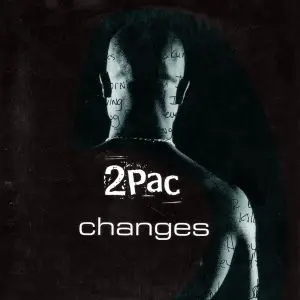
Changes is one of the best-known political texts Tupac Shakur ever recorded. The song is usually heard as a broad anthem against racism, poverty and violence, but it is more precise than that. It doesn’t merely say that society is sick. It draws a closed circle: poverty, racism, policing, drugs, prison, internalised hatred, Black-on-Black violence, then back to poverty. The title announces a desire for transformation, yet the refrain keeps repeating that some things never change. The whole song rests on that contradiction: change is necessary, and the world seems organized to prevent it.
To understand the record, you need the context. Tupac speaks as a young Black American man from poor neighborhoods, raised in an environment shaped by police surveillance, hard drugs, prison, Black revolutionary struggle and precarity. His mother, Afeni Shakur, had been a member of the Black Panther Party. So Tupac grew up with an acute political conscience: he knew that Black poverty is not merely an individual matter but the product of a history of racism, segregation, criminalization and social abandonment.
Changes is built on an instantly recognizable melody, drawn from The Way It Is by Bruce Hornsby and the Range, a 1986 song that already dealt with social inequality, poverty and racial discrimination. Tupac takes that musical material and hardens it. Where the original had a kind of pop melancholy, Tupac adds the street, crack, the police, Huey Newton, guns, prison and political rage. The result is a song that is both accessible and brutal. The studio facts matter here: the track was recorded in 1992, produced by Deon Evans, then reworked by Poke of the Trackmasters for the Greatest Hits compilation (single released in October 1998), with the hook re-sung by Talent. It is a text by the young Tupac, published by the posthumous industry, and it became his biggest European hit.
The first verse: waking up and doubting
The song opens on a blunt observation: nothing around him is changing. That opening is decisive. Tupac doesn’t start from an abstract idea. He starts from waking up. In the morning, he wonders whether life is worth carrying on with. The first political scene is therefore a suicidal scene. Before talking about the state, the police or racism, he talks about a body that wakes and asks itself whether to continue. Politics begins in exhaustion.
When he wonders whether he should turn a gun on himself, it isn’t mere provocation. He is showing that poverty and racism can produce an existential crisis. Being poor is already violent. Being poor and Black, in the America he describes, is worse still, because poverty is doubled by racial exposure: suspicion, policing, contempt, institutional neglect. Tupac does not separate class from race. He says, in substance: I am poor, and on top of that I am Black. That “on top of that” does not mean Blackness is shameful in itself. It means that in this society, being Black deepens the vulnerability.
The passage about hunger and bag-snatching matters enormously. His stomach aches, so his eyes start looking for a purse to grab. Tupac does not present theft as morally noble. He shows the direct passage from hunger to crime. Economic violence becomes street violence. The starving body produces the illegal act. That is one of his great strengths: he makes crime intelligible without making it innocent.
The police appear immediately afterwards. Cops, he says, have no concern for a Black man, and he places in his own mouth the historic racial slur to name the way white society looks at him. The next observation is harder still: a police officer who kills a Black man gets treated as a hero. Tupac is indicting a society in which police violence against Black people is not only tolerated but sometimes celebrated. The song dates from the 1990s, yet it resonates loudly with far more recent American debates about police killings.
The crack passage introduces a central idea: the drug is not merely an individual moral failing. Tupac suggests it is distributed, tolerated, or wielded as an instrument of social destruction. The verse briefly mimics the voice of a cynical power for whom feeding crack to children would cost nothing, since it would mean one hungry mouth fewer on the welfare rolls. The line is deliberately chilling. It imitates the voice of a power that counts poor Black children as social expenses. In the text, crack is not just a drug; it becomes a political weapon aimed at the neighborhoods.
When Tupac describes drugs being funnelled in, left for young men to sell to their own brothers, guns handed out, and everyone watching them kill one another, he is describing a mechanics of indirect destruction. Power doesn’t even need to do all the killing itself. It can create the conditions for self-destruction: drugs, weapons, abandonment, poverty, prison, surveillance. The inhabitants become the executioners of their own community. It is one of the most political passages in the song.
The reference to Huey is essential. Huey P. Newton co-founded the Black Panther Party. For Tupac he stands for a tradition of radical Black resistance, of self-defense, of anti-capitalist critique and struggle against police violence. When Tupac recalls that Huey urged people to strike back, and then notes that Huey was killed, he anchors the song in political history. Black resistance is itself vulnerable to assassination, repression and erasure. Revolutionary hope is present, but it is marked by death.
After that sequence of political rage, Tupac introduces a more fraternal idea. He says he loves his brother, but insists they will get nowhere unless they learn to share with one another. The brother here is not only the biological brother. It is the other Black man, the other poor man, the other inhabitant of the block. The song shifts from accusing the system to making an internal demand: it is not enough to denounce the police or the state; solidarity has to be rebuilt among the crushed.
The call to see one another as brothers rather than as distant strangers is the moral core of the first verse. Tupac knows the system manufactures separation: between neighbors, between the young, between gangs, between Black men, between the poor. He calls for that separation to be reversed. Real transformation begins when the man who seemed a stranger becomes a brother again. Politics becomes a matter of how you look at people.
The question about the Devil finding it harder to seize a brother who stays close mixes spirituality and politics. If men stand near one another, evil has less purchase. The Devil can stand for violence, drugs, hatred, racism, the police, the system, the temptation to kill, or all of these at once. Tupac isn’t doing systematic theology. He is using a moral image: closeness protects, separation exposes.
The childhood memory arrives at the end of the verse. He wishes he could go back to the days when they played together as kids. The line hurts because it sets lost innocence against the present. The children who played together have become poor men, armed, watched, divided. Then the refrain comes in: things do change, but in the wrong direction. The world changes because childhood disappears; the structures of oppression, meanwhile, stay put.
The refrain takes up the idea in Bruce Hornsby’s title: reality is what it is. But in Tupac’s mouth it is no serene acceptance. It is ironic and bitter. The refrain says that things will never be the same again, while also saying that some things never change. There are two kinds of change, then: individuals change, children grow up, neighborhoods mutate, the dead pile up; racism, poverty, the police and the prison seem to remain.
The second verse: hatred aimed at the wrong targets
The second verse starts again from the same observation: he sees nothing changing. The repetition matters. The song moves forward; the situation doesn’t. Tupac looks around and sees racist faces. He isn’t talking about an abstract racism but about faces. Racism is embodied. It lives in looks, stops, attitudes, institutions, everyday interactions.
The line about misplaced hatred is very dense. Hatred exists, but it strikes the wrong targets. The poor despise each other. The races scorn each other. Brothers kill brothers. Victims of the same system turn on one another. That misdirected hatred, the verse argues, disgraces every race at once. Tupac isn’t defending an inverted hatred. He is calling for an exit from the racial logic of destruction.
He asks what it would take to make this a better world. The question looks naive; it is grave. It comes after images of suicide, hunger, police and drugs. Asking for a better world in that context is not a cliché. It is resistance. Even inside a very dark text, Tupac keeps a remnant of political hope.
When he talks about wiping away what has been wasted, about taking the evil out of people, he is formulating an almost moral vision of politics. People are not wholly bad; something in them has been corrupted. Remove the evil and they can act correctly. The phrasing may sound simplistic, but it matches Tupac’s paradoxical humanism: even when he describes criminals, dealers or violent men, he keeps looking for the human being under the deformation.
The passage about Black and white Americans smoking crack on the same night matters. Tupac refuses to make crack a strictly Black problem, even though Black neighborhoods suffered a far heavier criminalization for it. The drug crosses racial lines; the punishment is not distributed equally. The song thus points to a hypocrisy: society treats similar behavior differently according to race and class.
When he observes that the only time the streets calm down is when men are burying each other, he is offering a bitter formula about negative peace. Tensions cease only in death. The street finds rest not through justice but through violent exhaustion. It is a very black line: peace arrives not because men reconcile but because one of them falls.
Then comes one of the most important lines in the song, the one that ties authenticity to healing: being real takes skill, and healing other people takes time. Being real, in rap, means being authentic, true, faithful to your experience. Tupac adds that this authenticity is a craft. Declaring yourself real is not enough. You have to know how to turn that reality into repair. Real courage is not merely surviving or fighting; it is healing others.
The passage about a Black president became one of the most quoted, especially after Barack Obama’s election in 2008. Tupac says America is not ready to see a Black man in the White House. In its own context the line expresses the political pessimism of the 1990s: America seems incapable of imagining a Black man at the top of the state. After 2008 the verse changed resonance: it is no longer factually true, but it keeps its historical force, because it shows how remote that possibility looked from inside Tupac’s world.
The song then turns to prison. It is no secret, he says: the penitentiaries are packed, and they are packed with Black men. He is aiming at the mass incarceration of African Americans. Prison is not described as an exception. It becomes a central institution of poor Black life. For Tupac, prison is one of the system’s great instruments: it locks up the bodies that the economy and the school system failed to protect.
But Tupac doesn’t leave the critique at the institutional level. He also addresses the dealer who stays in the drug trade. He tries to show him another road; the man stays in the dope game. The song thus refuses two simplifications. It does not say everything is the system’s fault alone. Nor does it say everything is the individual’s fault alone. It shows how the two lock together: the system creates the conditions, and individuals still have to choose.
The question of what a mother can do points straight to Dear Mama. The poor mother faces sons drawn to drugs, fast money, gangs, prison. She can love, warn, feed, weep, but she does not control everything. Tupac’s politics always stays tied to the family. Social decomposition shows up in kitchens, bedrooms, mailboxes, prison visiting rooms.
The passage about authenticity failing to win the brother over means that the call to moral dignity is not enough. The dealer may hear the speeches, but easy money speaks louder. He boasts of having made a thousand dollars in a day. Tupac answers, in effect: yes, but in a dirty way. The money is real; the way it was earned destroys children. Here again the text is morally taut: Tupac understands why the money attracts, and he refuses to forget who pays the price.
When he lends his voice to the dealer’s justification, the voice of a man who insists he has to get paid, he is exposing the logic of economic survival. It is one of the great justifications of crime across his work: you have to eat, pay rent, exist, be respected. But Changes sets that justification against its consequences. Getting paid by selling crack to children means reproducing the destruction of the neighborhood. The system pushes men toward crime, and the crime then destroys those already being pushed.
The interlude: the program
The interlude is the most explicitly programmatic moment of the song. Tupac says a change has to be made, that the people themselves must start changing. He isn’t speaking only to governments or police forces. He is speaking to his community. He asks for a change in how people eat, how they live, how they treat one another. Political change begins in daily habits.
The line about how people eat can seem surprising, but it matters. In radical Black political traditions, notably around the Black Panthers and other community movements, food, health and everyday organization are political stakes. Changing how you eat means taking back a measure of control over a body that poverty, junk food, drugs and stress are destroying. Tupac does not separate revolution from daily life.
Changing how you live and how you treat each other means stepping out of self-destruction. The old way, he insists, doesn’t work. The observation is brutal: the old habits, the old reflexes, the old violent loyalties, the old street economies save no one. They keep producing the same deaths. Survival therefore demands an internal reorganisation.
The third verse: fatalism comes back armed
And yet the third verse starts over from the absence of change. Even after the moral appeal, Tupac still sees war. He asks whether a brother can’t get a little peace. The request is modest: not paradise, not wealth, not total justice; just a little peace. The very fact that this request seems impossible shows the depth of the disorder.
He sets the war in the streets alongside the war in the Middle East. The verse doesn’t develop a detailed geopolitical analysis. It builds an analogy: everywhere, the world is organized by war. The scale changes, the logic remains. International conflicts and block-by-block conflicts belong to one and the same atmosphere of violence.
The passage on the war on poverty and the war on drugs is central. In the United States, the War on Poverty names the social programs launched in the 1960s. The War on Drugs, intensified above all in the 1980s and 1990s, drove the heavy criminalization of drugs and mass incarceration, hitting Black and poor communities hardest. Tupac compresses it brutally: instead of waging a war on poverty, they wage a war on drugs, which hands the police a license to harass him.
The critique is precise. Tupac is not merely saying the police are cruel. He is saying that the political choice to criminalize drugs rather than treat poverty gives the police the power to occupy poor neighborhoods. Drugs become the pretext for surveillance, arrest, humiliation and violence. Social policy is replaced by penal policy.
The claim that he never committed a crime he didn’t have to commit is quintessential Tupac. It does not mean he is legally innocent of everything. It means that in his experience, crime is often compelled by necessity. It is an existential defense, not a legal one. He is saying: if I did illegal things, the conditions pushed me there. The song asks that acts be judged inside their social context.
He then says he is coming back with the facts, handing them to the listener. Rap becomes counter-speech here. The media, the police, the state, the politicians tell one version of the street. Tupac gives another, from inside. He doesn’t claim neutrality. He claims lived truth.
Next comes a burst of verbs of physical domination, fired off as a warning: don’t let them trap you, shove you back, break you, humiliate you. The “they” can mean the police, enemies, the system, the exploiters. The Black body here is permanently under threat of being handled, beaten, degraded.
He says you have to learn to stand on your own, to defend yourself. The idea can be read two ways. On one hand it is understandable in a world where the state is experienced as hostile. On the other, it re-runs the logic of individual armament and permanent distrust. Tupac lives inside that contradiction: he calls for peace and solidarity, and he does not believe he can survive unarmed.
The mobile-phone reference shows the jealousy that gathers around signs of success. In the 1990s, owning a mobile is still a status marker. Being seen with one can attract envy, suspicion, a police stop, or violence. The objects of social mobility become dangerous. Being seen with something better can draw the attack.
When Tupac throws a popular taunt of the era at the police, the one about what they can’t touch, he is borrowing a period catchphrase. But almost immediately he says he doesn’t trust them. If they rush him, he shoots. The song thus returns to the logic of armed self-defense. Having called for healing and change, he falls back into the violent reflex. That is precisely the tragedy of the text: political consciousness is not enough to abolish fear.
The sound of the weapon then appears as onomatopoeia. The text makes the burst of fire audible. That noise is the end of the argument. When violence erupts, words turn into mechanical sound. The final percussion is not a stylistic flourish. It is the world reduced to gunfire. And that, he says, is how things are.
Then comes one of the most terrible sentences in the song: as long as he stays Black, he will have to stay armed. The sentence describes not a freely chosen identity but a racial condition lived as permanent exposure to danger. Being Black, in this world, means having to protect yourself. The weapon becomes an extension of the social condition.
He says he can never rest. Peace is impossible because he must always fear the return of someone he once hurt. The past comes back in the form of revenge. The neighborhood keeps the ledger: debts, humiliations, beatings, rivalries. Even a man who wants to change can find the past coming back armed. The circle never closes.
The last refrain repeats that this is how things are, but Tupac adds that he is trying to make a change. That tension is the heart of the record. On one side, fatalism: this is the way it is, some things never change. On the other, effort: change is needed, and he is trying. The song never finally chooses between despair and hope. It holds them together.
Talent’s voice on the hook softens the harshness of the verses. As so often with Tupac, soul singing creates an emotional space in which violence can be heard as lament and not only as threat. The contrast between melodic sweetness and lyrical hardness is essential. The music carries the sadness; the verses carry the anger.
The circle and the map
Changes is built as a circle. First verse: poverty, racism, police, drugs, guns, the need for brotherhood. Second verse: racism, crack, prison, internal responsibility, the critique of the dealer. Interlude: the explicit call for change. Third verse: war, penal policy, police, self-defense, weapons, the return of fatalism. The song wants out of the circle, and at the same time it demonstrates the circle’s strength.
The poetry of Changes lies in its power to compress entire systems into quick scenes. Hunger becomes a snatched bag. The police become a celebrated shooting. Drug policy becomes police harassment. Prison becomes a locked-up Black population. Solidarity becomes a brotherly look. Self-defense becomes a gun carried because one is Black. Tupac thinks politically in concrete images.
The text is also marked by a deliberate moral contradiction. Tupac condemns selling crack to children, and he understands the need for money. He calls for healing others, and says he will shoot if attacked. He wants peace, and stays armed. He criticizes hatred, and speaks from anger. The contradiction is not a failure of the song. It is its subject. Changes is precisely about a man who sees what ought to be done, but lives in a world where doing otherwise seems close to impossible.
A newcomer should therefore avoid the over-simple readings. Changes is not just an uplifting message. Nor is it just a complaint against white people or the police. It is a popular analysis of the social reproduction of violence. Tupac describes how a system produces the conditions that make crime probable, then punishes the criminals it helped produce. He also describes how the victims can reproduce the system’s violence among themselves. That is the core of what I call elsewhere Tupac the sociologist.
The song is deeply political because it refuses to separate the social, the racial, the familial and the psychic. The suicidal morning, the hunger, the police, Huey Newton, the drugs, the brother, the mother, the Black president, the prison, the war on drugs, the mobile phone, the gun within reach: all of it belongs to one world. Tupac isn’t writing a treatise. He is drawing a map of suffocation.
Changes holds a particular place in Tupac’s work because it makes explicit what is often scattered elsewhere. In Dear Mama, the politics passes through the mother. In Ambitionz Az a Ridah, it is covered over by the survivor’s armor. In Hit ‘Em Up, it nearly disappears beneath the revenge. In Changes it returns to the center. Tupac speaks here as a social witness, a child of the Black Panthers, a poor Black man, a street rapper and a poet of the American contradiction.
The record stays powerful because it offers no easy solution. It says the way of living, eating and treating one another has to change. It calls for brotherhood. It criticizes drugs, prison, police, racism and war. And it still ends with weapons, fear and fatalism. The song doesn’t lie: knowing that change is needed is not the same as changing.
The opening observation, that nothing is changing, is therefore more than an observation. It is an accusation. It accuses the state, the police, the economy, the dealers, the Black men killing each other, the penal policies, the racists, and collective inertia too. Everyone is caught in the circle; everyone must do something; almost no one knows the way out.
The greatness of Changes lies in that unresolved tension. Tupac is at once lucid and imprisoned, prophetic and contradictory, a moralist and an armed man, a brother and a threat, a revolutionary and a child of the street. He sees the necessity of change, and he carries within himself the very conditions that keep change from being simple.
That is why Changes is not merely a political song. It is a song about the repeated failure of politics when misery, race, policing, drugs and prison have manufactured whole lives before individuals ever get to choose freely. Tupac isn’t asking for pity. He is asking you to look at the mechanism. And once the mechanism has been seen, he asks the only question that counts: if the old way doesn’t work, what has to change now?
#lecture#changes#politique