The legacy
The East-West War, Without the Folklore
By Selim Rochat · 9 July 2026 · 4 min read
I need to tell you upfront how I’m going to tell this story: without manufactured thrills. The East Coast versus West Coast rivalry has been so mythologized, documentarized, romanticized, that people end up forgetting the essential. Two twenty-five-year-old men died. Two major artists, two catalogues cut short. The rest, the theories and the taking of sides, is set dressing that served to sell magazines for far too long. Here are the facts, in order.
The context: two labels, two cities, one industry
In the early nineties, rap’s center of gravity tilted toward California. Death Row Records, co-founded by Suge Knight, lined up Dr. Dre and Snoop Dogg and crushed the charts. In New York, the genre’s historic birthplace, Sean Combs’s Bad Boy Records answered in 1994 with the debut album of Notorious B.I.G. The rivalry was at first commercial and regional, the kind rap had always known. Nothing, at that stage, destined it to turn deadly. Tupac and Biggie were friends at the time, in fact: the New Yorker had learned from the Californian, and they had shared stages.
Quad Studios, November 1994: the tipping point
On November 30, 1994, Tupac arrived at Quad Recording Studios in Manhattan for a session. In the building’s lobby, he was attacked by several men, stripped of his jewelry and shot. He survived. Biggie and the Bad Boy crew were upstairs that night. Tupac came away convinced that his New York circle had known, or had even set up the ambush. Let it be said plainly: that suspicion was never proven. Biggie always denied any involvement. But Tupac’s conviction, forged on a hospital bed and then in prison, where he listened to the era of Me Against the World slip away from him, would structure everything that followed. The day after the shooting, he attended his trial in a wheelchair. Convicted, incarcerated, he got out in October 1995 thanks to bail money fronted by Suge Knight, in exchange for his signature with Death Row. The label rivalry had just fused with a personal grudge.
Hit ‘Em Up: the point of no return
In June 1996, Tupac released Hit ‘Em Up as a B-side. The track needs no quoting: it’s a frontal attack of staggering violence against Biggie, Bad Boy and everything orbiting them, mixing explicit threats with intimate insults, territorial claims with public humiliations. Even today, listening to it makes you uneasy, and that’s precisely what you should hear in it: not a feat of battle rap, a codified genre that existed before and would exist after, but the moment the codes broke down. After that, no mediation was possible. The era of All Eyez on Me was that of an artist at his commercial peak, locked into a logic of war that his label was happy to feed.
September 1996, March 1997
On September 7, 1996, after a Mike Tyson fight in Las Vegas, the car carrying Tupac and Suge Knight was sprayed with gunfire at a red light. He died of his wounds on September 13, at twenty-five. Six months later, on March 9, 1997, Biggie was shot dead in Los Angeles as he left a party. He was twenty-four. Two murders, for a long time no charges, and a void that the mystery industry rushed to fill. The albums The Don Killuminati and then R U Still Down? came out in that climate, read as testaments or coded messages. I’ll point you to my reviews: they are records first, not grimoires.
The court case, at last
For twenty-seven years, Tupac’s murder officially went unsolved. In September 2023, Nevada prosecutors indicted Duane Davis, known as Keffe D, a former figure in Compton’s gang world, the only person ever charged in the case. The prosecution relies in particular on his own public statements over the years. Davis has pleaded not guilty, and his defense disputes even his presence in Las Vegas that night. After several postponements tied to the sheer volume of the case file, his trial is set for August 2026 in Las Vegas. Until a final judgment is rendered, the presumption of innocence applies in full, and I will leave it there. If the trial finally brings answers, so much the better. It will bring back neither the lives nor the records that were never made.
What this story did to rap
The war between the coasts left lasting damage on the way this music gets told. It planted the idea that danger authenticates the artist, that violent death is a form of consecration. Generations of rappers grew up inside that narrative, and some paid for it with their lives. It also eclipsed the essential: Tupac isn’t great because he died in Las Vegas, he’s great because he wrote Dear Mama and Brenda’s Got a Baby, because he burned up the screen in Juice, because his life story condenses America’s contradictions. The sensationalist documentaries will keep thriving, and I sort through them in my selection. My recommendation doesn’t change: when the folklore wears you out, go back to the records. They don’t lie.
Two coasts, two backdrops
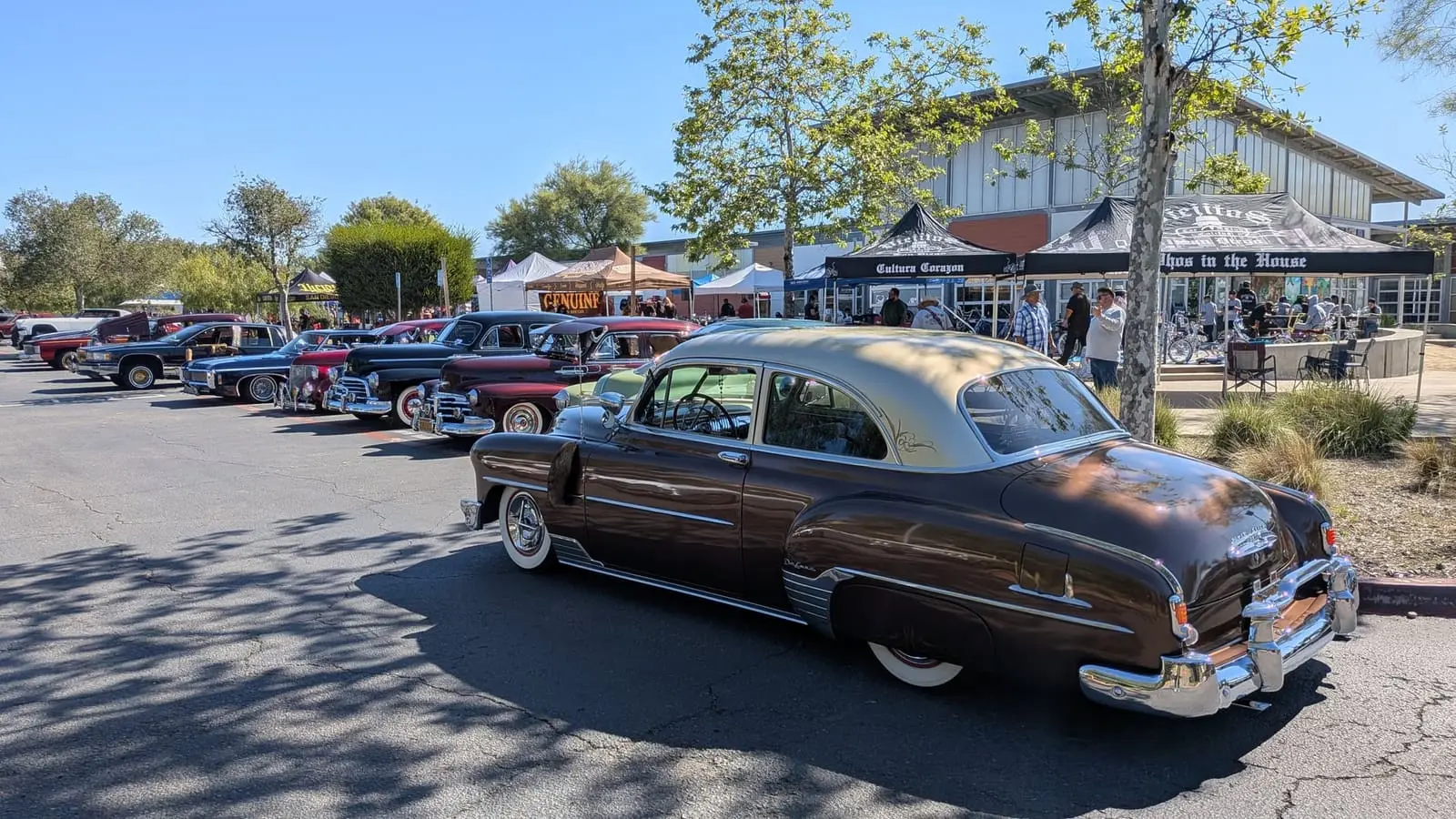
Customized lowrider with flamboyant paintwork, hood open, at a California car showAhsoka Dillard · CC0 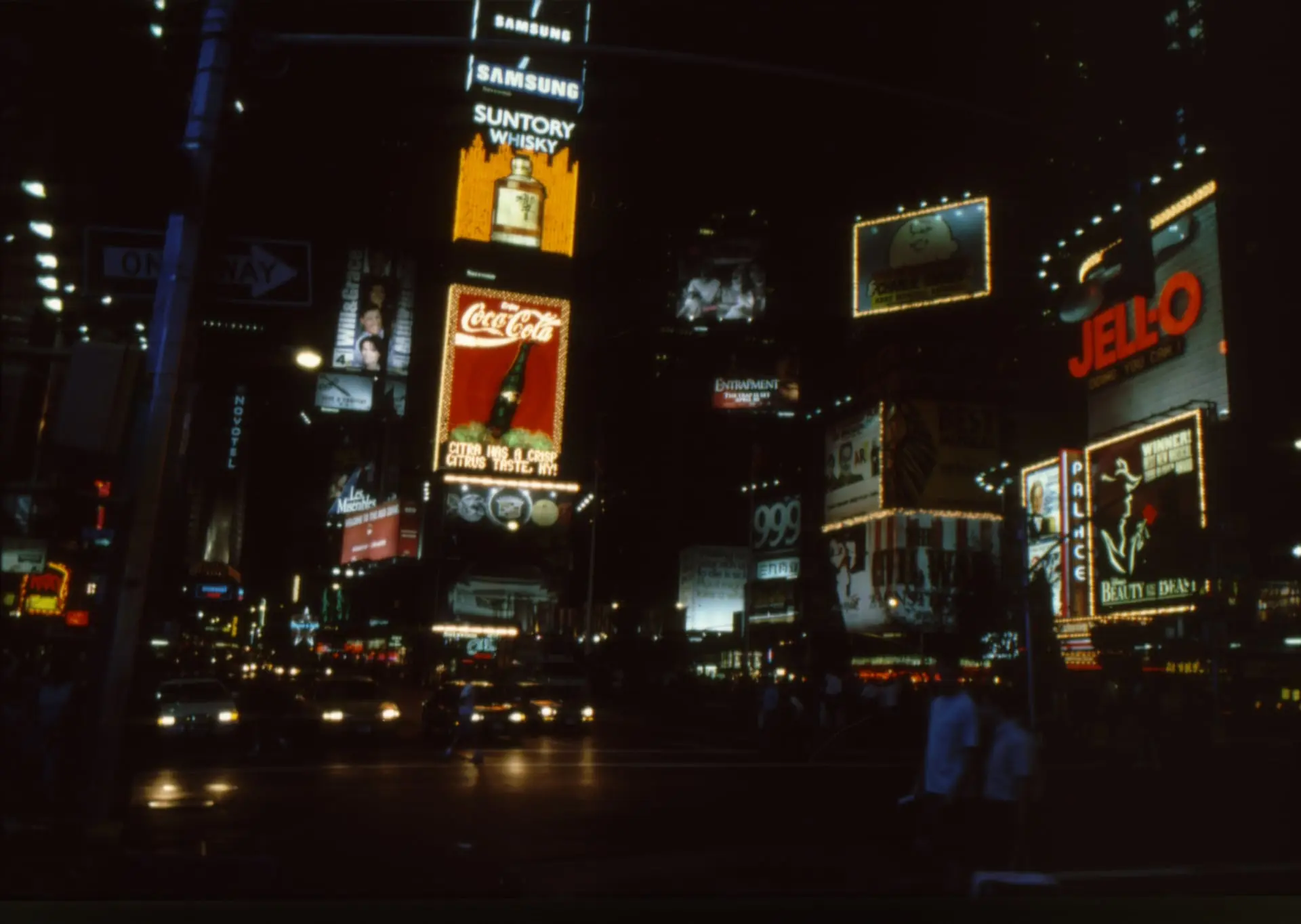
Times Square in May 1999: yellow cabs, neon lights and giant billboards under an overcast skyEsther Westerveld · CC BY 2.0
#east coast west coast#death row#biggie#histoire du rap