The legacy
What Rap Owes Tupac, Thirty Years On
By Selim Rochat · 9 July 2026 · 5 min read
Thirty years after his death, Tupac is everywhere. On t-shirts, in documentaries, in barroom debates about the greatest rapper of all time. And that’s precisely the problem. When a figure becomes this omnipresent, you can no longer tell what he actually handed down from what the legend machine has manufactured. I wanted to sort it out. Not the theories, not the rumors of survival in Cuba. The concrete, verifiable traces of what rap owes to this man who died at twenty-five.
The institutions eventually gave in
Let’s start with the most official part. In 2017, Tupac entered the Rock and Roll Hall of Fame in his first year of eligibility. Snoop Dogg presented him, and the symbolism was potent: the friend from the Death Row years, the one from the All Eyez on Me sessions, inducting the first solo rapper in the institution’s history. Before him, hip-hop had only ever entered as a group. That distinction says something precise: for the pantheon of American rock, Tupac isn’t one rapper among many, he’s the one through whom the genre earned the status of major individual work.
Seven years earlier, in 2010, the Library of Congress had already inscribed Dear Mama in the National Recording Registry, as part of the 2009 selection. Only two hip-hop titles had preceded it in that registry, which catalogues the recordings deemed significant to America’s sound heritage. The official text hailed an eloquent tribute to mothers who hold a family together despite poverty and addiction. I come back to this in my reading of Me Against the World: that song brought into the national archives a social reality that institutional America preferred not to look at.
Coachella, 2012: the ghost that changed everything
On April 15, 2012, on the Coachella stage, a figure appeared alongside Snoop Dogg and Dr. Dre. Bare-chested, bandana, that walk you’d recognize among a thousand. The famous hologram, which technically wasn’t one (a projection onto an angled screen, descended from an old theater illusion), sent a shockwave around the world. You can find it fascinating or macabre, and I confess I swing between the two. But the effect is measurable: that night opened an entire debate about posthumous concerts, digital avatars, the image rights of the dead. Every time a departed artist is resurrected on stage, someone invokes the Coachella precedent. Tupac, even dead, had once again inaugurated something.
Kendrick Lamar, the heir who talks to the ghost
The deepest influence isn’t measured in ceremonies. You hear it. In 2015, Kendrick Lamar closed To Pimp a Butterfly with an unheard-of gesture: a conversation with Tupac, built from an interview given in 1994 to a Swedish radio station. Kendrick asks his questions in the silences, and the editing creates the illusion of an exchange between the Compton rapper and his departed elder. I won’t transcribe the words for you, listen to the record, it’s the only way to feel the vertigo. What matters here is the gesture: the most celebrated rapper of his generation chose to end his most ambitious album by explicitly casting himself as heir, almost as a disciple consulting the oracle.
And Kendrick isn’t alone. The claimed lineage runs through every generation. Nas, though caught up in tensions with him at the time, has never stopped acknowledging what his generation owed Pac. YG built part of his identity as a Compton rapper in that shadow. From the Eminem of the 2000s, who produced entire posthumous albums (I cover this in my guide to the posthumous albums), to today’s rappers who name him as their first listening shock, the chain has never broken.
Thug Life, from acronym to novel
Another concrete trace, and not the least of them: literature. In 2017, Angie Thomas published The Hate U Give, a novel about a Black teenage girl who witnesses her friend’s death at the hands of a police officer. The title takes up the acronym Tupac had tattooed on himself and had theorized: Thug Life as an abbreviation, the idea that hatred sown in childhood ends up laying waste to everyone. The novel became a global bestseller, then a film in 2018. A thought formulated by a rapper in the early nineties thus structures one of the most widely read young adult books of the decade. Few artists, in any genre, can claim as much.
And the folklore?
Let’s be honest, not everything in the legacy carries the same weight. The theories about his survival, the numerological readings around Makaveli, the seven days, the hidden clues: that’s folklore. Entertaining at times, but it passed nothing on to rap itself. Likewise, the image of the absolute martyr too quickly smooths over the man’s contradictions, his mistakes, his shadow side, everything that his real story recounts.
The verifiable influence, on the other hand, comes down to a few through-lines. Tupac established the idea that rap could carry writing that was intimate and political at once, capable of moving from fury to tenderness within a single album. He supplied the model of the rapper as total performer, acting included, from Juice to Poetic Justice. And he left behind a repertoire that the most conservative institutions ended up consecrating. Thirty years on, when a rapper wants to say something true about his mother, about the street, about America, he speaks a language Tupac helped forge. That’s the legacy. The rest is scenery.
If you’re just discovering him, my advice still stands: begin with the starter’s guide, then work back through the records. They say it all better than the legends do.
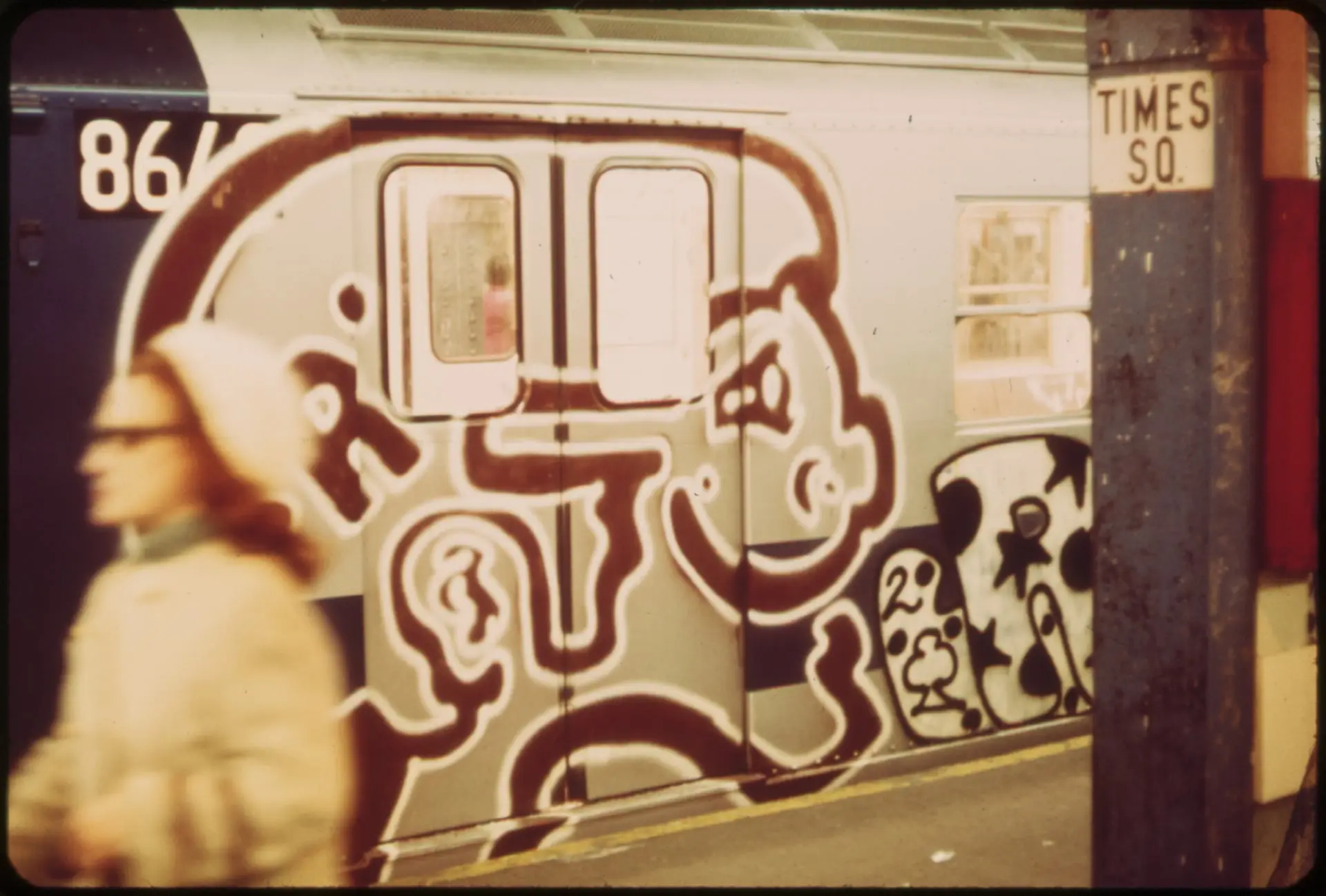
Times Square subway station covered in graffiti in 1973, photograph from the Documerica programErik Calonius (EPA, Documerica) · domaine public
#héritage#influence#kendrick lamar#hall of fame